gaetano-armenio-blog.webp

BLOG

contenuto-img1

ART

27 December 2025

They burned my installation (and I understood I had won)


The phone call came in the middle of the night. "Hello, Mr. Armenio? They've burned the whole installation in the square."

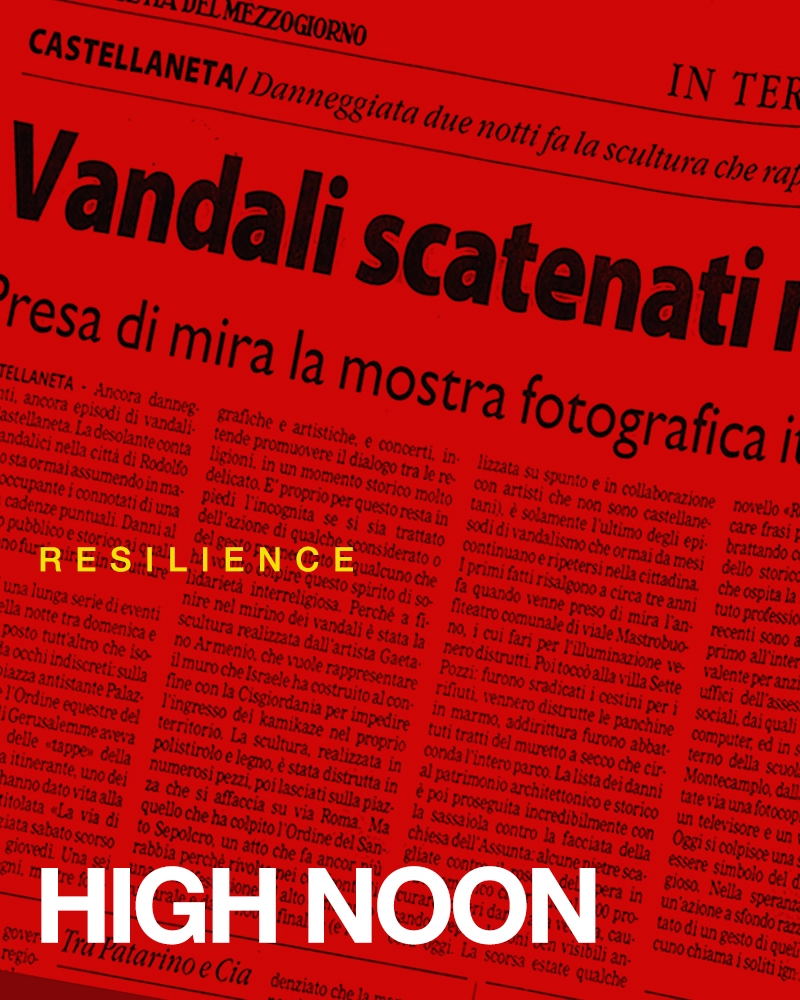
Castellaneta, 2006. A few months earlier I had staged "La Via di Gerusalemme" in Molfetta, and there we had repeated the format: concerts, a photography exhibition, and at the centre of the main square something no one expected. Blocks of polystyrene shaped into a collapsed wall. A red ribbon for the blood that flows. All around, my large-format prints from the Holy Land, blown up as big as doors. Provocative. And, to me, necessary. In the town park I had hung other photos. There they touched nothing.


The doubt you read on people's faces

A few days before the opening, Dr. Michele Recchia came up to me, worried. "Armenio, are we sure about this? People look at it with a disturbed expression." "They'll get used to it," I said. I was lying. I was afraid too. Every time you build something different, that voice whispers the same question. What if you're wrong? What if they don't understand? The voice is always there. What changes is whether you listen to it or keep on building anyway.


Nobody burns something trivial

That night, standing by the phone, I understood one thing. They had set fire to an object that disturbed them too much to leave alone. I never knew for certain whether it was my work that burned, or something larger that the work carried with it. Maybe both.

The event went ahead anyway. The photos in the park were intact, orderly, perfect. And yet that empty square, with the blackened remains at its centre, said more than any well-preserved print.


What's left of a burned square

I think back on it now and then, and I smile. Art that doesn't disturb stays furniture. And that evening, a wall, I had brought down for real.


> discover the exhibition La Via di Gerusalemme


contenuto-img1

19 December 2025

Turning off a Basilica to turn on culture


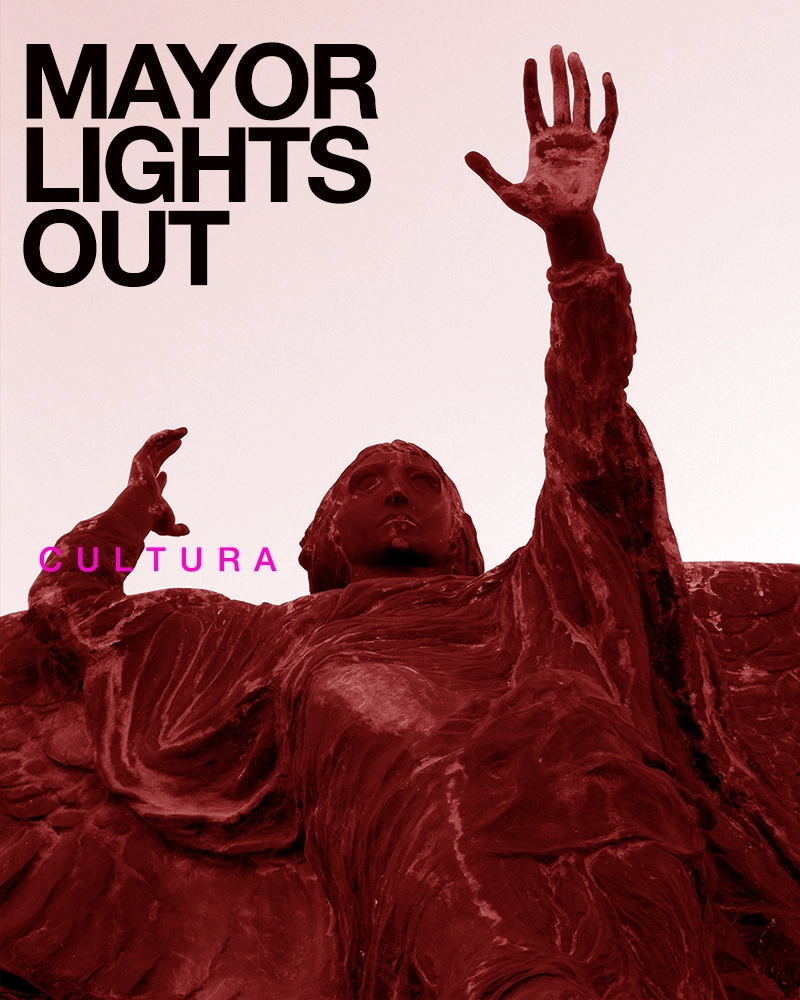
"Mr. Mayor, next Saturday keep the Madonna dei Martiri district switched off." The mayor at the time, Tommaso Minervini, looked up from his desk and stared at me the way you stare at someone who has just said something outrageous. "Armenio, absolutely out of the question."


It was 2006. With Giovannangelo de Gennaro and Paolo de Santoli we were preparing "La Via di Gerusalemme" inside the Ospedale dei Crociati: music, installations, video projections on the medieval walls. But for it to work we needed darkness. Real darkness. Not an aesthetic whim, a technical necessity. Under the streetlights the projections would have been invisible. That's why I was there, asking the impossible.


When they tell you no

"What if we switched off only the Viale dei Crociati?" Silence. The mayor thought about it. "Only the avenue. And only for the opening." Done. Sometimes the solution isn't to insist on the same request, but to find the one no one has imagined yet.


Who's getting married tonight?

The avenue dark, the square dark, even the Basilica sunk in shadow. People from the district came closer, curious. "Who's getting married tonight? And who are the bride and groom?" I tried to explain it was a cultural event. They didn't believe me. The only reason anyone would switch off the Basilica of the Madonna dei Martiri was a royal wedding. A cultural event wasn't even among the possibilities for them. And that's exactly the point. When you do something no one has ever done, people don't have the categories to understand it.


Inside the Ospedale dei Crociati, meanwhile, something else was happening. De Gennaro's notes filled the medieval halls, de Santoli's installations guided the visitors, and across the ancient walls ran the images of my reportage from the Holy Land. No one was "seeing an exhibition." They were living a motionless pilgrimage.


The idea was born in Jerusalem

Months earlier, walking along the Via Dolorosa, I had asked myself how to make people in Molfetta live all this. The answer wasn't in the technology. It was in daring to imagine something never done before: turning off a Basilica to turn on culture.


Some ideas frighten you at first. Then they stay. That evening, years later, the people of the district still remember it.


The Way to Jerusalem (2006) – exhibition details

contenuto-img1

9 December 2025

1992, 1993: when Italy was about to sink (and so were we)

At the start of the Nineties, Italy was floating without guarantees. 1992: the lira leaves the SME. The Amato government forcibly withdraws money from every Italian's bank account. Not from ours, those were always empty. Tangentopoli brings down the political parties, the mafia strikes at the heart, murdering Falcone and Borsellino.


In Molfetta we spare ourselves nothing. We lose our mayor, Gianni Carnicella, assassinated, and don Tonino Bello leaves us, taking with him certainties that will never come back. The air was that of great turning points, but no one had handed us the instruction manual.


The fourth warehouse: pure stubbornness

Right in that period we were building our plant. The fourth in Molfetta's industrial zone. Around it, nothing. Only countryside, a few scattered warehouses, and us, stubborn as mules, betting everything on a dream that looked more and more insane.


Then comes the final blow. The Amato government, with a retroactive decree, cancels all the non-repayable grants meant for businesses. Ours too. The one we had counted on, built plans on, imagined the future on.


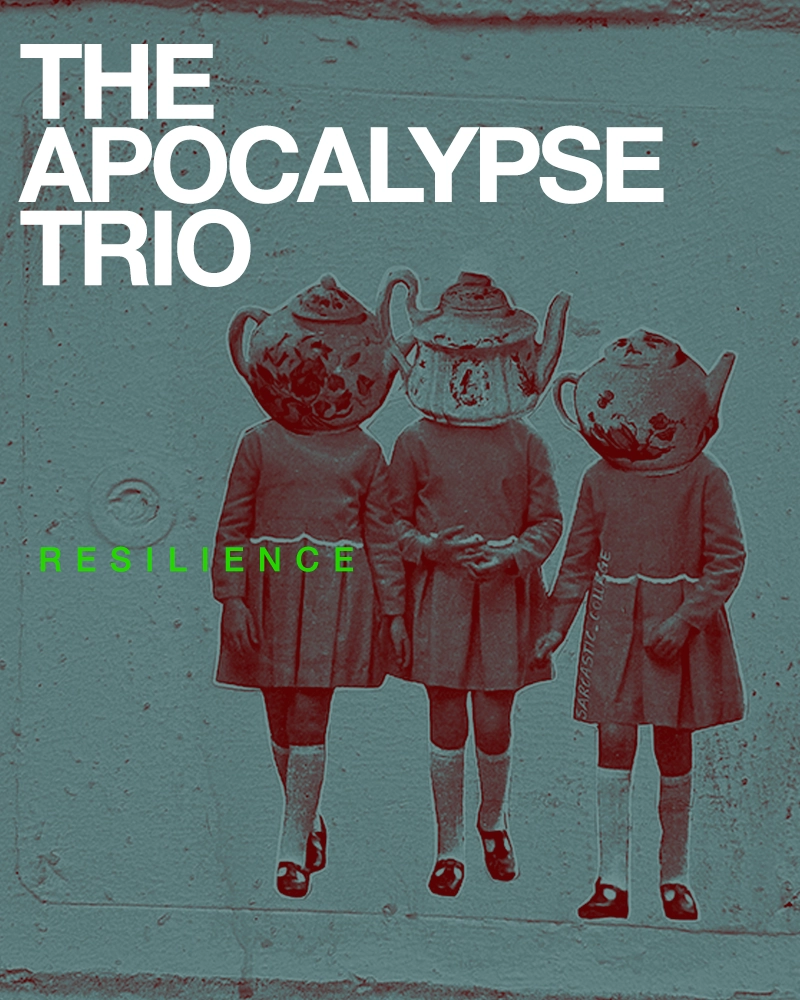
The three of the apocalypse

I remember that Saturday afternoon as if it were yesterday. Me, Stefano (still my partner today) and the builder, standing in front of the warehouse foundations just starting to take shape. Three dark faces, a silence heavy as boulders, and one burning question: what do we do now? He was worried about recovering what he was owed. We had no idea where to find the money to go on.

We stood there, saying a few empty phrases that didn't convince even us. We could have stopped. It would have been reasonable, sensible, understandable. No one would have judged us.


But no. Because there is a moment, only one, when you decide who you really are. When you understand that giving up is the easiest thing in the world, and holding on is what's left of you. Without many words, with that stubbornness that comes to us from far back, we decided.


Forward. Anyway. Always.

We rolled up our sleeves. We worked twice as much and slept half as much. Tightened our belts, cut costs, negotiated with the banks, convinced the suppliers, resisted those who advised us to give up. Because resilience isn't a nice word to put on Instagram. It's the daily, stubborn choice not to surrender when everything and everyone tells you to. It's the obstinacy of those who build while the world collapses.


That warehouse is still standing today. So are we. And that countryside around it? It's not empty anymore.

contenuto-img1

29 November 2025

Red zone, or how to sell orecchiette when leaving the house is complicated

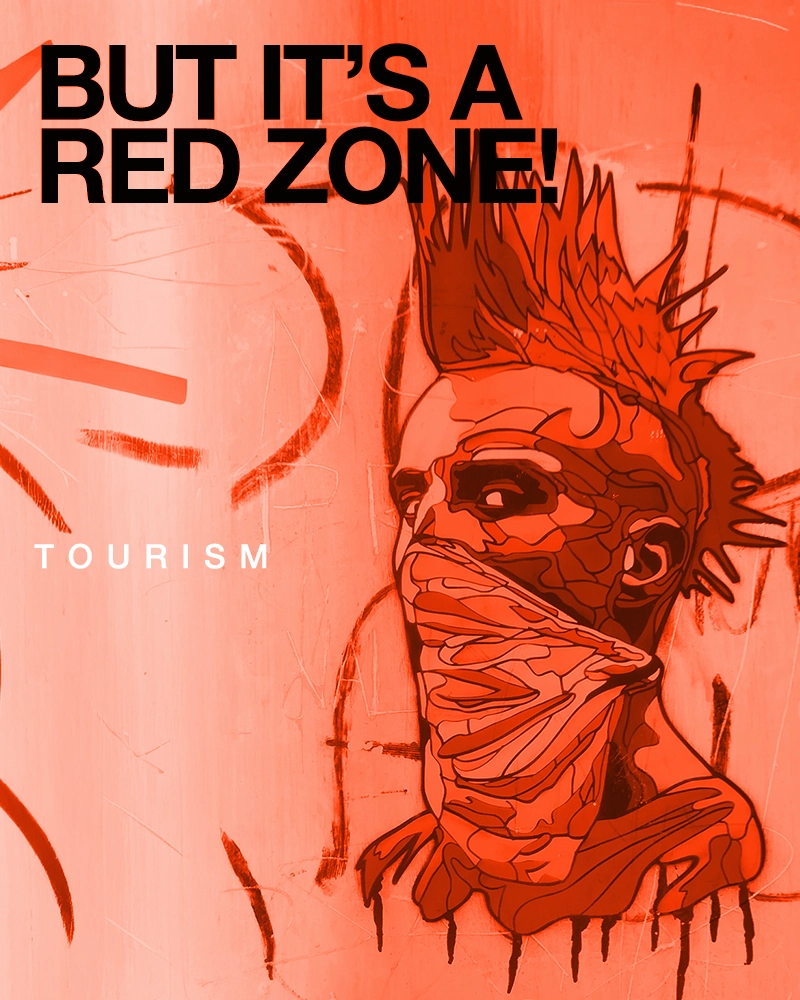
"Armenio, but we're in a RED ZONE!" That's the phrase I kept hearing in the summer of 2020. On the phone, the mayors of Apulia swung between health-emergency panic and total bewilderment at my proposals for experiential tourism. Let's be honest: pitching itineraries while the whole of Italy is sealed indoors sounds like madness. And yet.


When everyone stops, someone thinks about after

I was working from one certainty. Sooner or later things would restart, and whoever was ready would have an edge. So let's restart from ourselves, I thought. Let's begin telling the world about us. That's how PugliaAutentica.it, the Apulia you've never seen was born, a territorial marketing project conceived in the least touristic moment of recent history.


The idea was simple and ambitious. To connect towns, traditions, producers and cultural operators from the Gargano to the Ionian coast: from the rites of Holy Week in Apulia to the patron saint festivals of the Patron Saints from the Walks of the Soul to the Puglia of Flavours. All ready, all online, waiting for the green light. Fourteen towns from the Gargano to the Salento joined, along with fifteen Apulian agri-food companies.


Apulia comes to your home

The result was this: while tourists couldn't come to Apulia, Apulia went to them. We set up an e-commerce of typical products shipped across Italy and Europe. The paradox was served, selling a territory without being able to let anyone visit it. And we didn't stop there. In parallel we built themed itineraries, multilingual guides, experiential packages ready for the restart.


BIT Milan 2021: face masks and virtual stands

The BIT, the International Tourism Exchange, planned for February in person, reinvented itself online from 9 to 14 May 2021. We showed up at the Digital Edition with a virtual stand telling the story of authentic Apulia to operators and travellers from all over Europe. No live presentations: videos, calls, online materials. A hybrid format that caught the moment, the urge to restart was there, the ways were still cautious.


Those who build during the crisis

That phone call with the mayors in the middle of the red zone makes me smile today. But it left me something: in moments of crisis, whoever keeps designing starts one step ahead, as long as they still feel like dreaming. While Italy shut down we shipped orecchiette, and when it began to reopen we were already ready with itineraries, packages and a tested territorial network.


Visionary or stubborn, I'll leave the verdict to you.

contenuto-img1

21 November 2025

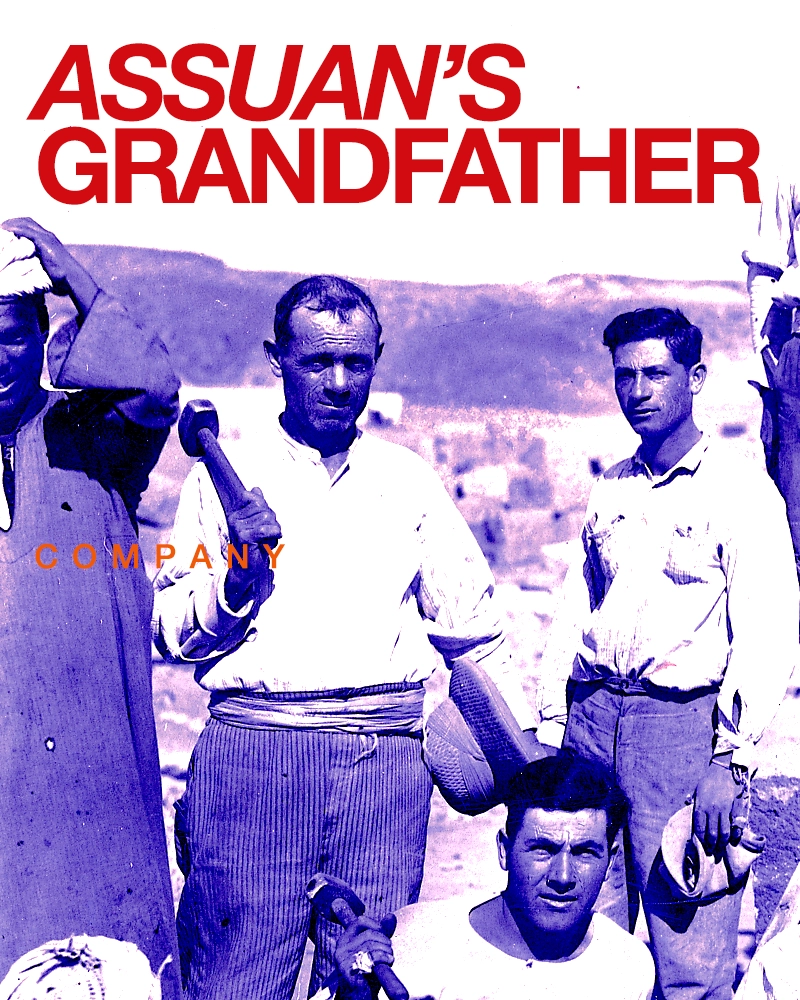
A story of Italian emigration: my grandfather left Molfetta in 1930 to build the Aswan dam. A journey that cost everything for a piece of bread.

Molfetta 1930: when leaving meant surviving


Early Thirties. The country still carries the wounds of the '29 crisis. In the South, reality is unemployment, miserable wages, hunger. From many homes people leave: for the North, for America, for the building sites in Africa. From Molfetta too they leave like this, in silence, with a light suitcase full of hopes.

I look at this photo often. My grandfather, together with other desperate men, left Molfetta to work on the construction of the Aswan dam, in Egypt. They weren't seeking fortune. They were seeking a piece of bread.


The boys of the desert

He was a stonecutter. He worked the stone, as my father would later. In the photo I see them: barely in their twenties, tools in hand, white shirts dirty with dust, hats to shield them from the African sun. Some manage half a smile. Others have the hard look of those who know this isn't adventure but necessity.


The price of bread

I don't dare imagine what the working conditions at the dam were like. After a year my grandfather came home. Not with the money he'd hoped for, but sick with dysentery. And at home he found another wound: his wife too, my grandmother, had been struck by a severe paralysis in her legs that kept her in bed for the rest of her life.

Two lives marked. One in the desert, building a dam. The other at home, waiting.


Where we come from

When I talk today about entrepreneurship, projects, territorial packaging, I know where I come from. I come from men who built dams in the desert to feed their families. I come from the hands of stonecutters who worked the stone. My grandfather a stonecutter. My father a stonecutter, working the stones of Molfetta in the Fifties. Today I build relationships and business instead of rock, but with the same southern stubbornness.


This story isn't the heroic epic of Italian emigration. It tells where we come from. From people who didn't give up, who crossed the sea, who built dams. Real work is always building dams in the desert.

contenuto-img1

14 November 2025

A story of cultural packaging

2011. From a patron saint festival in San Severo came the brand "Patroni di Puglia: la festa," a territorial marketing project that brought together 32 towns in Apulia to promote cultural tourism tied to the region's traditions and patron saint celebrations. Nicola had kept his promise. "If we get out of this room alive, in May you'll come to my place for the San Severo festival." And I, true to my word, showed up.


The fujenti you don't expect

That Sunday in May 2011 I watched the "fujenti" come running right up against the fireworks batteries during the feast of the Madonna del Soccorso. I joined them at once to photograph and film. It reminded me of Pamplona with the bulls. Men, boys, women running pressed against the batteries. As if to race the fire. Not behind it. With it, literally.

From emotion to project

A few days later I went to see Silvia Godelli, Apulia's Regional Tourism Councillor. I proposed: "Councillor, after the rites of Holy Week we should dedicate a project to the patron saint festivals. It's an enormous intangible heritage. We can promote it and spread tourist flows across the seasons. For the budget, you put in a share, I'll raise the rest from the towns." The answer came at once: we launch the brand "Patroni di Puglia: la festa".


When the vision is clear

The towns that joined the project came on board without difficulty. When you know clearly where you want to go and pass on genuine enthusiasm, the world follows. With tenacity I told the story of a concrete project: a strict set of standards, a multilingual pocket guide, digital presence, national and international fairs. Clear objectives, defined timelines, measurable results and a pinch of creative madness. Trust is built by showing you have a vision and the tools to realise it. And then we’d become ‘famous’ for the Holy Week in Apulia project.


The packaging of the territory

In the end I was doing my job: packaging. I took scattered cultural content, festivals, illuminations, pilgrimages, fires, floats, and gave it attractive packaging for the tourist market. My passion for design and photography let me create formats that worked: a recognisable visual identity, photographic storytelling for web and social, guides with careful layout. Not only strategy, also aesthetics.

Instead of wine labels, I packaged traditions. Instead of pasta packaging, I promoted intangible heritage. Same method, same skills, different product.

And to think it all began on that balcony in San Severo. Or perhaps from a promise made between the walls of a hospital.