gaetano-armenio-blog.webp

BLOG

contenuto-img1

23 September 2026

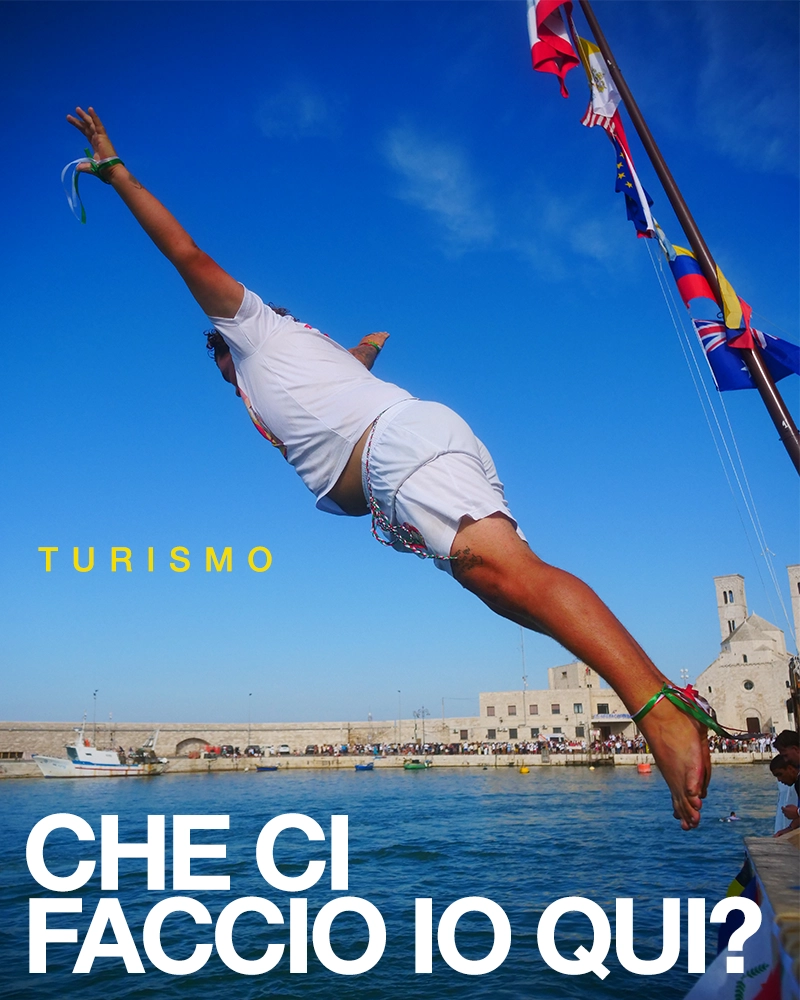
Four hours aboard the fishing boats for the sea procession of Molfetta, feast of Maria SS dei Martiri, patron saint of the town.

The sacred, the profane and a sign read backwards.


What am I doing here. Inside the sea procession of Molfetta

S"What am I doing here?" is a question I have asked myself many times, in my working life and outside it. It comes when you feel out of place, when your being somewhere has no obvious reason. And yet the urge to explore new ground always pushes me to try, because curiosity is an incurable disease.


Luckily, I would add.I had been invited by Mimmo Facchini, a friend and a former boat owner, for two reasons that hold together, because he thinks I am a capable photographer and because this year the draw had gone to his cousin's fishing boat, the Nuovo Saturno, given that in Molfetta who carries the statue out to sea is decided neither by money nor by family name but by a lottery, and when your turn comes it rarely comes again.


He asked me aboard for the sea procession of 8 September, the feast of Maria Santissima dei Martiri, four hours from four in the afternoon until eight in the evening with no way of getting off, and I accepted late and rather badly, out of curiosity more than courage.


The comfortable side of the barrier

I have worked on patron saint rites since 2006, with Settimana Santa in Puglia and then with Patroni di Puglia, and for years I have been building stories about popular devotion while always standing on the spectator's side, with the good spot, the light worked out in advance and the freedom to leave whenever I felt like it. I found myself surrounded by people I did not know, faces I had never seen before, and in Molfetta that does not happen, because I do not live in a big city and here you know everyone at least by sight. Not them. Not one.


On board that freedom does not exist, and this is what changes everything, because for the first two hours I did nothing but trip over everything and bang my head on hatches built for men shorter than me, while my only thought was not to end up in the water, which is to say that anthropology, seen from the inside, is done mostly with your knees.


What you cannot see from the shore

Then at some point I stopped defending myself and I looked, and there was an old man beating a bass drum standing on planks that moved, and a man diving in fully dressed while the cathedral slid past behind him, and a friar talking to the sailors and gesturing towards the harbour, and wedged between two boards of the deck a pale blue card with Ave Maria printed on it, fallen and trodden on, which nobody all afternoon could be bothered to pick up. People sang, danced and prayed.


And this is what you cannot grasp from the shore, because here the sacred and the profane do not take turns but live together in the same square metre of deck and in the same minute, so much so that on that afternoon Maria Santissima dei Martiri was travelling on the deck of a boat named after a Roman god, and nobody had noticed, myself first of all.


At eight I came down wrecked, with the feeling that I had spent fifteen years photographing the side the feast shows to outsiders.


photo by Gaetano Armenio


contenuto-img1

August 31, 2026

I expected to tell the story of Tricarico's anthropological masks through a camera. Instead, the Pro Loco asked me to sit at a table and talk about tourism, cultural tourism, I add that part myself.


When the rite becomes a show

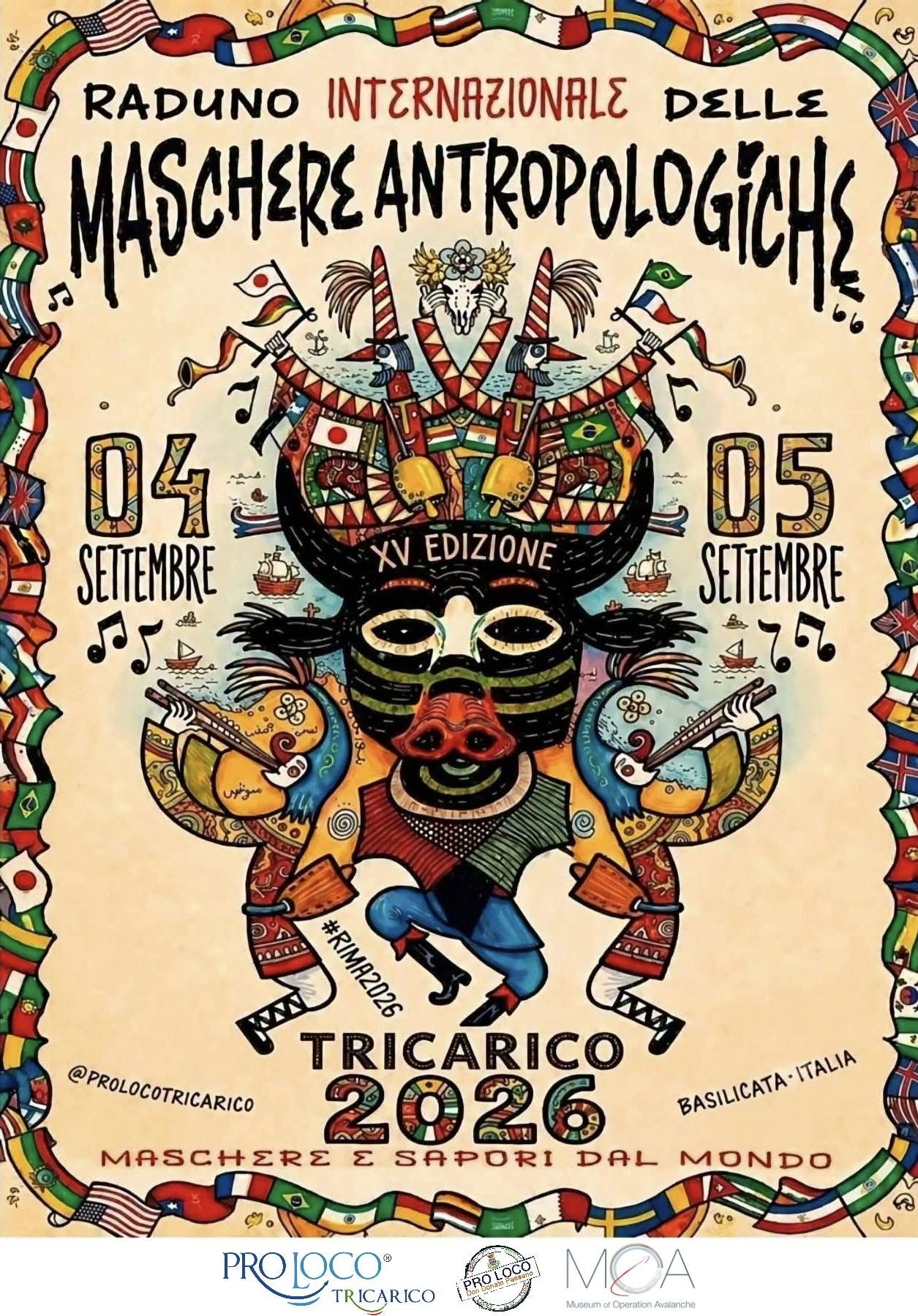
The title of the meeting, on September 5 at 10:45 in the Villetta Comunale Massaioli, is blunt: "The Temptations of Tourism". It happens inside the 15th edition of the International Gathering of Anthropological Masks of Tricarico (MT), in Basilicata, where this year sixteen groups from Spain, Portugal, Bulgaria, Ecuador, Bolivia and Peru parade alongside the town's own cows and bulls, and l'Mash-kr, the mask born from the feast of Saint Anthony the Abbot on January 17.


The gathering has existed since 2011, wanted by the Pro Loco and the town council to open the Arab-Norman old town to an outside audience. Three days of parades, food and wine stands and conferences, with a theme that already says it all: "Masks and Flavours from the World".

The temptation is always the same, in every territory I have crossed over the past twenty years: turn a rite into a product because it draws more people, and find out afterwards that people came precisely because it wasn't one.


You don't go alone

At the table, alongside an anthropologist from Unibas, the general director of APT Basilicata, a journalist and documentary maker, and the coordinator of the MASKS project for CNA Matera, I'll bring a conviction that didn't start on Friday: when you speak alone, the world struggles to listen.


I've tested this three times. In 2008 I brought twenty-two towns in Apulia together around the rites of Holy Week. In 2011, with Silvia Godelli, then regional tourism councillor, I did the same with patron saint festivals: that's how the Patroni di Puglia brand, thirty-two towns, was born. In 2021, in the middle of the pandemic, the same idea became Pugliautentica.it, the Apulia you've never seen: fourteen towns, fifteen food and farming businesses, one single proposal instead of fifteen disconnected voices.


Three networks, one rule

Three different networks, the same rule: a tradition on its own doesn't become a product you can sell on national and international tourism markets. It needs a recognisable identity, authentic, not inflated. And behind the identity, real promotion and commercial work, not just storytelling. I'm not sure saying so is enough. I know I've seen it work while following the MASKS project's European campaign among the caretos of Bragança and the zoomorphic masks of half of Europe: without the network of twelve partners holding the project together, every mask would have stayed a local matter.


How do you make a tradition known without making it disappear inside its own success. Communication, done well, doesn't distort a town's anthropological masks. It protects them.

Tricarico is trying to do the same, with cows, bulls and cowbells instead of caretos. It's the same problem faced by a hundred small Italian towns that open their doors without knowing how wide.

We'll see what comes out of the discussion, on September 5.


The round-table discussion and who will be there

At the "Temptations of Tourism" table, together with me (I handle communication for the European MASKS project), are:

Margherita Sarli, general director of APT Basilicata; Vita Santoro, anthropologist and Unibas coordinator for the MASKS project; Marina Berardi, anthropologist and photographer; Antonio Di Biase, of Cooperativa Nuova Atlantide; Donatello Caivano, manager of "Il volo dell'angelo"; Leo Montemurro, president of CNA Matera and coordinator of the MASKS project; Lorenzo Scaraggi, journalist and documentary maker.


The organisational contact for Pro Loco Tricarico is Giuseppe Fedele.


contenuto-img1

11 August 2026

The 14th edition of the Sovereto Festival in Terlizzi, taking place from 21 to 23 August, has ‘Migration’ as its theme. I’ll explain how I developed the event’s communications strategy.


MIGRATIONS, and my first departure


A mural, photographed on some ordinary wall. A man standing next to a car, and above him a line: "no country for old men". I took the shot, and I decided it would be the opening image of this piece. Because we always picture migration as young, when in fact it happens at any age.

The 14th edition of the Sovereto Festival, in Terlizzi from 21 to 23 August, holds on to the same word as last year: Migrations. Plural, which is the whole point. Peoples, languages, sounds, memories. I am handling the communication again, and I have circled this word for a long time.


The first time I left

I was eighteen. I left for Milan. I do not remember the suitcase, I remember the feeling: that real life started somewhere else, and that I had to go and reach it. Then I came back to Apulia, and I have never really moved since. But I still carry that departure with me. Whoever has left once recognises the others who are leaving. One look at the station is enough.

That is why the mural stopped me. The man next to the car could be me at eighteen. It could be you.

Then I understood something. Since 1980 I have never moved house, yet I have changed trade several times: sales, graphics, publishing, packaging. You migrate while standing still too. You change the horizon, not the address.


Music walks, and so does its director

Every sound we know comes from somewhere else. The blues is the toil of the fields turned into voice. Jazz is a harbour. The Sardinian launeddas are older than almost everything, yet they sound new. Bringing together Mediterranean, jazz, Sardinian and contemporary sounds is not filling a programme. It is showing that a culture only stands up when it meets the others.


Artistic direction is by Giovannangelo de Gennaro. The same restless soul who, back in the Festival Viator days, bombarded me with programmes over WhatsApp while I sent him Neffa's "Molto calmo", with no effect whatsoever. But Giovannangelo is a real walker, one who draws from the via francigena, from the silence between one note and the next. A festival about Migrations you hand to someone like that. To someone who has made music a journey.

A footprint, after all, is proof that someone passed through. Not that they stopped. Like me at eighteen. Like that man on the wall, who no, does not wait for anyone's permission to hit the road again.


Sovereto Festival 2026: dates, venue and practical information

The 14th edition of the Sovereto Festival takes place in Borgo Sovereto, Terlizzi, in the province of Bari, from Friday 21 to Sunday 23 August 2026. All events are free and open to the public.

For three days the old village turns into a cultural space spread across streets and squares: concerts, talks, book presentations, workshops for children and adults, choral singing sessions, art installations and the self-production market. The music moves across jazz, world music, folk repertoires and contemporary experimentation.

Artistic direction by Giovannangelo de Gennaro, under the patronage of the Municipality of Terlizzi, Department of Culture.


The programme of the three evenings

Friday 21 August

8.00 pm Presentation of "Me la sono andata a cercare. Diari di una reporter di guerra" (Laterza 2025). The author Giuliana Sgrena in conversation with Gianpaolo Altamura. Institutional greetings from Mayor Michelangelo De Chirico and Culture Councillor Daniela Zappatore. In collaboration with the research group S/Murare il Mediterraneo.

9.30 pm Andrea Marchesino, Gargano Blues. Andrea Marchesino guitars, Andrea Resce bass, Michele de Costanzo drums.

Saturday 22 August

6.30 pm near Suberito Bar. Semi dal mondo, eco-workshop by BimBumBam, for children aged 5 and over.

7.00 pm Traversa del Santuario. Presentation of "La rosa di Gaza" (Les Flâneurs 2026). Co-editor Lucia Cupertino in conversation with Pasquale Vitagliano, with a contribution by Mariastella Dilillo, Médecins Sans Frontières office in Barletta.

8.30 pm Lisa Manosperti, Uncaged Bird, a tribute to Abbey Lincoln. Lisa Manosperti voice, Roberto Ottaviano saxophones, Umberto Petrin piano.

10.00 pm Moving Clouds, Oltre confine, thirtieth anniversary live set. Giuseppe Porsia flutes and guitar, Luigi Sforza guitars, Marcello Zinni piano and keyboards, Giorgio Vendola double bass and electric bass, Michele Perruggini drums and percussion.

Sunday 23 August

10.00 am in the village. Coro sociale, a workshop on the voice as a sound source. Open air session led by Giovannangelo de Gennaro.

6.30 pm near Suberito Bar. Approdi, di città in città, a writing and reading workshop by Le Città Invisibili, for children aged 5 and over.

7.00 pm Traversa del Santuario. Andiamo a fare la Merica, the great Italian emigration to the USA. Open air lecture by Francesco Vino.

8.30 pm Gavino Murgia, Sonos Disterraos. Saxophones, sulitu, launeddas, bassu a tenore, samplers.

10.00 pm Duo Petti & Molino, Jouer de la musique. Manuel Petti accordion, Marco Molino vibraphone and percussion.

Throughout the festival

"Festa Maggiore Terlizzi, Sovereto", photographic installation by Maria Pansini. From 6.00 pm, the self-production market.


contenuto-img1

30 July 2026

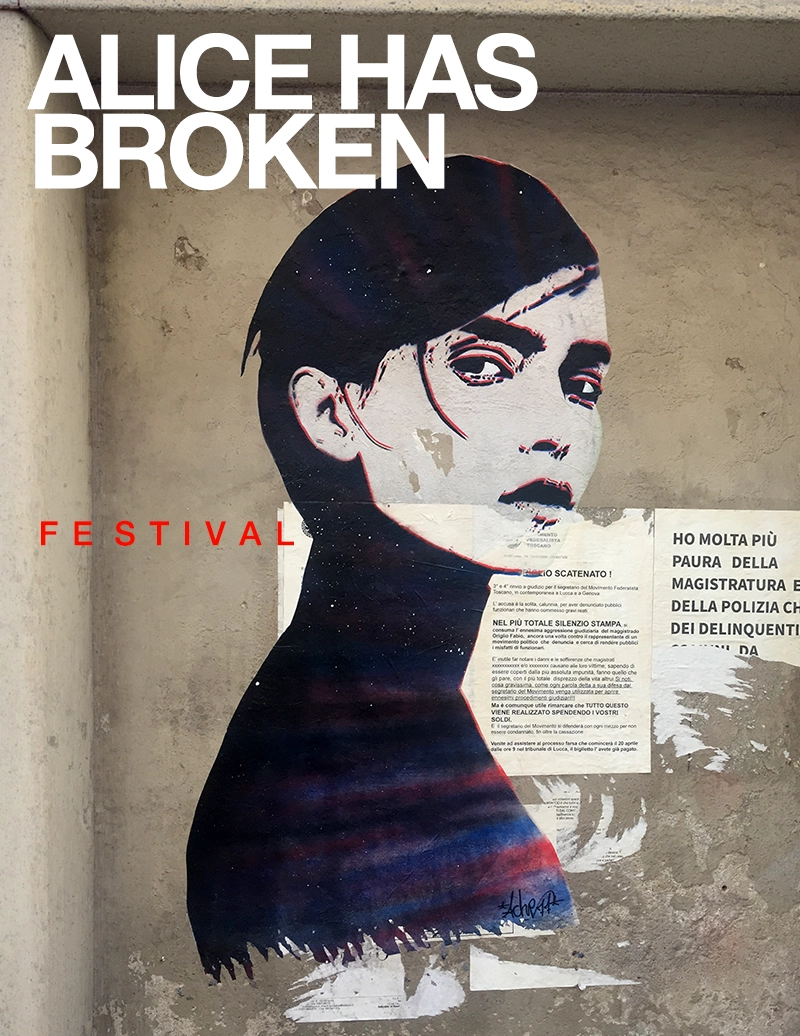
That summer of 2023 I had one problem only, and it was called sold out. Alice's concert in Molfetta, inside Festival Viator, at Parco di Ponente, with a 25 euro ticket in August, while half the province of Bari was putting on an event every night, was rather like selling ice cream at the North Pole. I was in charge of communications, which is an elegant way of saying I was the officially designated culprit, should the disaster ever turn up.


The day before, or the mistake of being happy

The miracle came anyway, and we sold out. Giovannangelo de Gennaro and Michele Lobaccaro, the artistic directors, congratulated me, and I puffed up like a sail and went to sleep the sleep of the just, which in hindsight is always the prelude to something. There is a rule I should have learned back in 1980: never be too happy the day before, because it brings bad luck and leaves you exposed on the rocks.


Paradise, sponsored

The next morning I took the bike out to my favourite beach, deserted at that hour. I dived in, four strokes, then stretched out on the rocks with my headphones on and a bit of ambient music. If I could have taken a photo of myself right then, I would have called it "The man who has figured out life". It lasted exactly as long as a ringtone.


Gaetano, we have a mess: Alice's concert in Molfetta might be cancelled

It was Giovannangelo, and he went straight to it: "Gaetano, we have a mess." No preamble, no polite detour, and the tone alone was enough to know the perfect day had ended right there. Alice had fallen the evening before in Otranto, she had fractured her ankle, and the concert was about to collapse. First a wave of heat came over me, then the precise sensation that I was going to faint right there, with the ambient music carrying on undeterred, relaxing me while I died.


I could not even speak, and I had one single image in my head: a thousand people and more queueing up to ask for their 25 euros back while I tried to explain the meteorology of ankles.


The chair that saved the night

Then came the second call, the good one: Alice would play regardless, all she needed was a wheelchair. And I can assure you that never in the history of humankind has a wheelchair been hunted with such devotion. I found one, and that evening Alice sang with her ankle bandaged and her voice exactly where it had to be, and it was one of the finest concerts I can remember. The beauty of imperfection, which I usually explain inside elegant slides, that evening came down entirely to a stool, the least theatrical object in the world, and to a man who twelve hours earlier had nearly drowned in his own happiness.


Not quite a moral, but if I can leave you with something, it is this: enjoy your sold out, by all means, but keep the headphones low, because the phone call always arrives at the exact moment you think you have understood everything.


contenuto-img1

13 July 2026

A Truth Said in a Low Voice.


Here's something few communication professionals will ever admit: when you're talking to the vastasi (Molfetta dialect for the local troublemakers), you have to speak their language. Polite words don't stick. Institutional campaigns like "Let's help our city" cling to a billboard the way a label clings to a wet bottle: they fall off after two days.

Once again, my city had turned into an open-air latrine. On one side, the usual Molfetta residents with little respect for public space. On the other, the local institutions, the town council and the rest, pretending not to see.

So in the summer of 2009, I said: let's try a poster campaign, on our own money. Who knows, maybe someone will mend their ways.


The Day the Phone Rang

Molfetta, 2009. The phone rang. A commanding tone: "COVER those posters!" It was the Mayor, who also happened to be a Senator, more than a little furious. Shortly after, the president of the local water utility summoned me, angry that the campaign had launched "without his knowledge." Too bad it was self-funded by Associazione Opera, and none of his business.

On the billboard, in warning-sign yellow: "Per strada non fare il pezzo di merda" ("Don't be a piece of shit out on the street"). On the next wave: "Liscio, gasato o vastaso?" ("Smooth, sparkling, or loutish?"), "Sapore di sale o sapore di maiale?" ("Taste of salt or taste of pig?"). And finally, the coup de théâtre: a contest open to the whole city, to choose the last slogan together.

Why Communication That Disturbs Works

Around the same time, dozens of Italian municipalities were spending thousands of euros on urban decorum campaigns signed by national agencies: all flawless, all forgettable. Ours cost little and was still remembered twenty years later. Not for its merits. For the irritation it caused.

It worked because it spoke the language of the street, not the language of the office. It didn't ask permission. And it called things by their name.

The scandal in the corridors of power lasted a few weeks. The conversation in the city lasted much longer.


That Phone Call, and the Other One

Today, I tell the story of the Mayor-Senator's phone call like a small medal. But the real proof that the campaign worked came from another phone: a journalist from La Repubblica called me because the slogan had reached his newsroom. The same phrase they wanted covered up in Molfetta was, outside Molfetta, worth an article.

When an institution tells you to cover something up, and a national newspaper calls to talk about it, you've usually hit the mark.

The rest of the story is in the project page.


contenuto-img1

22 June 2026

The Communication of Nave Italia: designing the visual identity of an event devoted to inclusion while getting seasick.


The phone that won't stop

Corrado has been calling me for over a month. Several times a day. Early morning, then mid-afternoon, then in the evening just when I thought I'd dodged it. Bringing Nave Italia to Molfetta was his idea, and he's anxious the way you get anxious when something big depends on too many people at once. Every call I tell him the same thing: stay calm, keep your cool. It doesn't help, I know, but it's my way of staying close to him. I'm a member of Il Popolo Granchio, the association behind the event. I can't ignore his calls. And, to be honest, I don't want to.


Fitting everyone onto a single sheet

They asked me to handle the communication for a ship. Me, who gets seasick and will never set foot on that ship. Maybe that's exactly why I tell its story well. I watch it from land, the way the crowd will watch it. Because this wasn't about announcing a festival. It was about holding together the Italian Navy, the Tender To Nave Italia Foundation, the Harbour Master's Office, the Apulia Region and nine associations that work with disability every single day. Heavy logos, hierarchies that don't tolerate mistakes, one single sheet where everything has to breathe without smothering.

I built the visual identity around the ship, not around the institutions.


The photograph of the brigantine fills the space, the logos sit where they belong without stealing the scene. Whoever arrives on Saturday understands the programme in a few seconds. Whoever wants to climb aboard on Sunday finds the times without looking for them. Because Nave Italia is no parade. It's the largest operational sailing brigantine in the world, and on board people with disabilities and fragilities learn autonomy through life at sea. A serious thing, told without pity. The hard part of my job was this: saying something delicate without making it weigh. And then, of course, absorbing the anxiety of the man who dreamed it up. Corrado called to check. I answered to reassure.


The band I wanted myself

The Banda Santa Cecilia. A ship like this doesn't arrive in the silence of some anonymous dock, it arrives welcomed. Saturday 27 June, at six in the afternoon, when the brigantine moors in the port of Molfetta, the brass will be there to tell it that it was expected. I'll be there too.


Feet on dry land, as always. Listening to the band and watching a ship I told from start to finish without ever climbing aboard.


PRACTICAL INFO

From 27 to 29 June, port of Molfetta


Nave Italia in Molfetta, the project page

See the photo gallery