jumbotrone-img

SANTA CECILIA BAND

jumbotrone-img

SANTA CECILIA BAND

About Us

COVER THEM ...

13 July 2026

A Truth Said in a Low Voice.


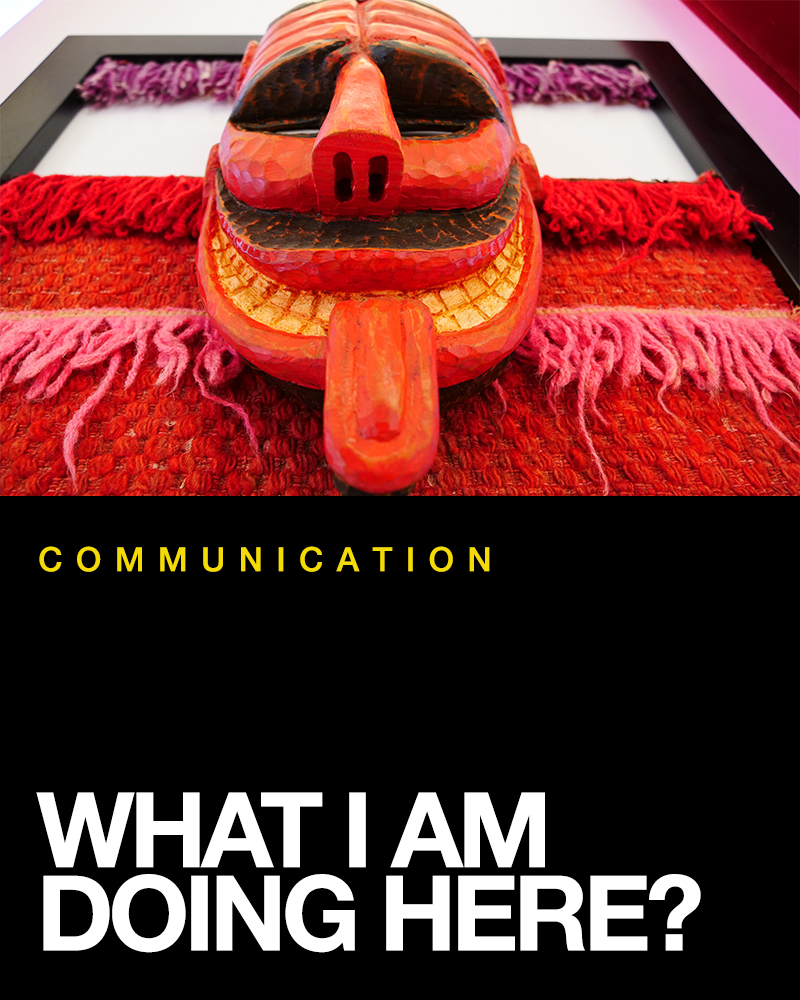
Here's something few communication professionals will ever admit: when you're talking to the vastasi (Molfetta dialect for the local troublemakers), you have to speak their language. Polite words don't stick. Institutional campaigns like "Let's help our city" cling to a billboard the way a label clings to a wet bottle: they fall off after two days.

Once again, my city had turned into an open-air latrine. On one side, the usual Molfetta residents with little respect for public space. On the other, the local institutions, the town council and the rest, pretending not to see.

So in the summer of 2003, I said: let's try a poster campaign, on our own money. Who knows, maybe someone will mend their ways.


The Day the Phone Rang

Molfetta, 2009. The phone rang. A commanding tone: "COVER those posters!" It was the Mayor, who also happened to be a Senator, more than a little furious. Shortly after, the president of the local water utility summoned me, angry that the campaign had launched "without his knowledge." Too bad it was self-funded by Associazione Opera, and none of his business.

On the billboard, in warning-sign yellow: "Per strada non fare il pezzo di merda" ("Don't be a piece of shit out on the street"). On the next wave: "Liscio, gasato o vastaso?" ("Smooth, sparkling, or loutish?"), "Sapore di sale o sapore di maiale?" ("Taste of salt or taste of pig?"). And finally, the coup de théâtre: a contest open to the whole city, to choose the last slogan together.


Why Communication That Disturbs Works

Around the same time, dozens of Italian municipalities were spending thousands of euros on urban decorum campaigns signed by national agencies: all flawless, all forgettable. Ours cost little and was still remembered twenty years later. Not for its merits. For the irritation it caused.

It worked because it spoke the language of the street, not the language of the office. It didn't ask permission. And it called things by their name.

The scandal in the corridors of power lasted a few weeks. The conversation in the city lasted much longer.


That Phone Call, and the Other One

Today, I tell the story of the Mayor-Senator's phone call like a small medal. But the real proof that the campaign worked came from another phone: a journalist from La Repubblica called me because the slogan had reached his newsroom. The same phrase they wanted covered up in Molfetta was, outside Molfetta, worth an article.

When an institution tells you to cover something up, and a national newspaper calls to talk about it, you've usually hit the mark.

The rest of the story is in the project page.


Molfetta, Apulia, 2009: a self-funded poster campaign sends the Mayor into a rage and reaches the newsroom of La Repubblica.

CANTINE ...

10 september 2025

The Grape Harvest at the Cantine d'Araprì in San Severo (FG).


For a long time I had wanted to capture one of the most intense moments of Apulian winemaking, the harvest. This year, with a drought that sped everything up, the rows came alive as early as the first days of August, when many growers started picking to save the grapes from the heat. So I followed the harvest closely at Cantine d'Araprì in San Severo, a client of ours, with a spontaneous photo reportage. I did not expect that behind every basket full of grapes I would find more than farm work. A story of community and identity.


A reportage between tradition and labour

The moment I took out the camera, something happened. My presence became the news of the day. The pickers, immersed in ancient gestures repeated for generations, turned routine into a show. A worker with his face stained with red grape juice, tired but smiling because he knew he was being photographed. The red of the Pinot Nero dominated every shot, the clusters with their violet shades. Fatigue was on their faces, and next to it the pride of people working grapes meant to become something good.


From vineyard to cellar

Cantine d'Araprì, known for their classic method sparkling wines made partly with Pinot Nero, guided me through their land explaining every step. The real star could not be missing. A black and white dog with the eyes of an experienced supervisor, who seemed to say: I have always been here, you are just passing through.


Wine labels, when the detail counts

Seeing our adhesive labels on the d'Araprì bottles made me think. Etichette L'Immagine is not just a supplier. When we make labels for wineries of this quality, every detail weighs. From the design to how it holds up in a cold room, everything has to match the wine it dresses.


The strength of the territory

This reportage caught the gestures that repeat at every harvest. The red of the grapes, the faces dirty with work but satisfied, tradition alongside technique. That is how you build a business in Apulia.

Do you have a company worth telling? The labels we print tell a story before anyone even reads them. If you have a product to dress, write to me.


https://www.etichettelimmagine.net/ita/home.html


The harvest at Cantine d'Araprì, San Severo

COOPERATIVE ...

September 1980.

Dreaming is serious work (and also quite tiring).


The story of Editrice L'Immagine begins on a train to Bari. September 1980, seven eighteen-year-olds fresh out of school were about to found a company without knowing it. Destination: the League of Cooperatives, where a notary was waiting to sign the founding deed of Cooperativa L'Immagine. But first, because some Apulian traditions are non-negotiable, a mandatory stop at Magda's bakery.


Focaccia first, notarial deeds later

Duty before pleasure. We had reversed the order. I still do not know how you face the birth of a company without oil, tomato and oregano. A solemn hall, a polished table, the air of a historic moment. The notary began reading while the seven partners tried to look professional. It was a failure. One had oil on his cheeks, one tomato on his lips, one crumbs on his shirt. In the silence, Leo whispered one thing. You are wearing socks in Sampdoria colours. The notary looked at us over his glasses. And these would be the founders of a cooperative? Yes, that was us.


27 Via Francesco Nullo, between cockroaches and Beatles

Our first office was thirty square metres in Molfetta, shared with some unconventional flatmates. While Steve Jobs was changing the world from a garage, we learned business with a payphone and a mortadella sandwich at 11. Every morning they waited for us, right on time. Small, dark, fast. Six legs each. Those stubborn cockroaches, our personal Beatles, reminded us every day what resilience means.


Seven million lire and no credibility

Then the big day. Opening the company account. All seven of us showed up at the bank, each with our own million lire in cash. Seven million, a serious sum in 1980. The clerk at Banca Cattolica looked us up and down. Jeans, trainers, satchels and bum bags. His first question was not about our plans. "But where are your parents?" We had seven million on the table and looked like kids playing at being entrepreneurs.


The lesson I had not asked for

It was a free master class. Like when a client, to squeeze a discount, would say "I want to speak to the owner". "But I am the owner" I would answer. Being underestimated taught us one thing. Results speak louder than appearances, and credibility is built project after project.


Forty-five years later

Today  Editrice L'Immagine turns 45. When I walk into the office I always think of 27 Via Francesco Nullo. The morning cockroaches, the clerk looking for my father, the clients ready to contest anything to get a discount. I have understood they were all part of the plan, even if none of us knew it back then. The secret? Never taking yourself too seriously.


1980. How we founded a company with tomato on our lips

GIANNI ...

6 august 2025

Gianni Berengo Gardin has died. With him goes a piece of Italian photography, the real kind, the kind that needs no filters to tell the world.


The news takes me back to 2013, when I pulled off something that seemed impossible. Bringing him to Molfetta for an international photography contest. The one who made the impossible possible was Cosmo Laera, photographer and lecturer at the Brera Academy. A dream that took shape in the Auditorium of the Diocesan Museum, where for two days I sat next to the man many simply call the Master.


Two days beside the giants

258 photo reportages to judge. A jury that seemed to come out of any enthusiast's dream. Besides Berengo Gardin, there were Denis Curti of Il Fotografo, Laura Serani of the European Institute of Photography in Paris, Antonella Gaeta of Apulia Film Commission, Giancarlo Piccirillo of Pugliapromozione, Cosmo Laera and Enzo Quarto of RAI 3 Puglia. I stood there in silence, catching every comment like an anthropologist studying an unknown tribe. Every remark was a treasure.


When it all becomes real

Berengo Gardin had that rare ability to look at a photograph and read its soul. Technique, for him, was a given. He went straight to the heart of the image. "There is truth here" he would say, pointing at some photos of Holy Week in Apulia. And when Berengo Gardin speaks of truth, you just listen. The winner was the procession of the Desolata of Canosa, photographed by Michele Sorrentino. Five thousand euro in prize money and, above all, the seal of a jury I will hardly forget.


The daring dream

That project built an international network. The European Institute of Photography in Paris, the Apulia Region, the Brera Academy and RAI together, to carry Apulian traditions into the world. But the real lesson came from him, from his mere presence. You do not need to be the best to build ambitious projects. You need to be mad enough to try. To bring one of the greats of contemporary photography to your own city.


The legacy of Gianni Berengo Gardin

Now that he is gone, what remains is the memory of those eyes that read reality better than anyone. Thank you, Master. For teaching us that photography is not only technique, it is a way of seeing.

When the giants leave us