visit-molfetta-turismo-cultura- gaetano-armenio.webp

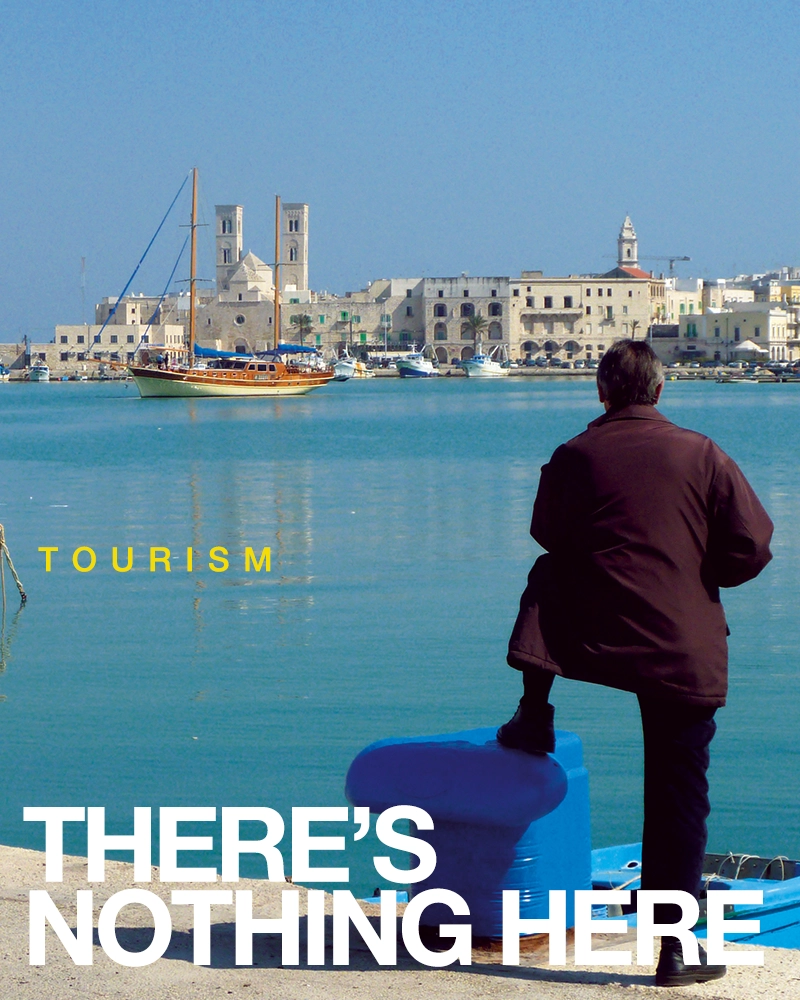
THERE'S NOTHING HERE

Home > Blog > QUI NON C'È NULLA

Discover more

MASKS ...

2 september 2025

Bragança, Portugal. 27 and 28 August 2025.

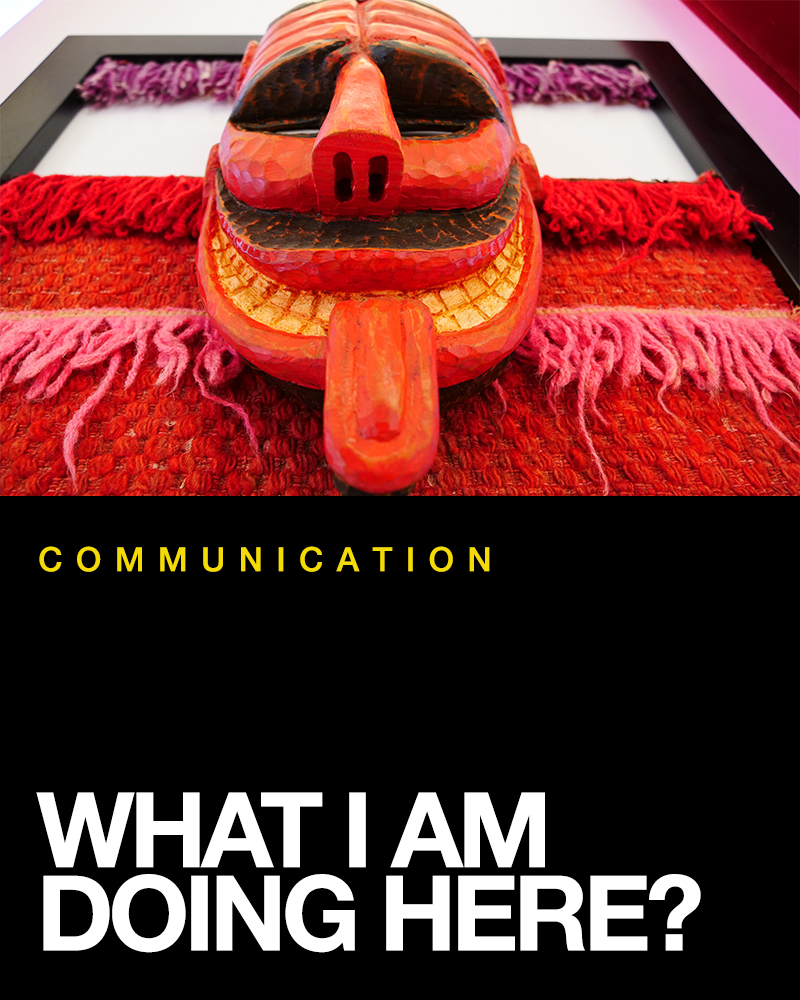
Since 2024, I have been coordinating communications for MASKS, a European project on ritual masks: from the brotherhoods of Holy Week to the carnivals of Europe.

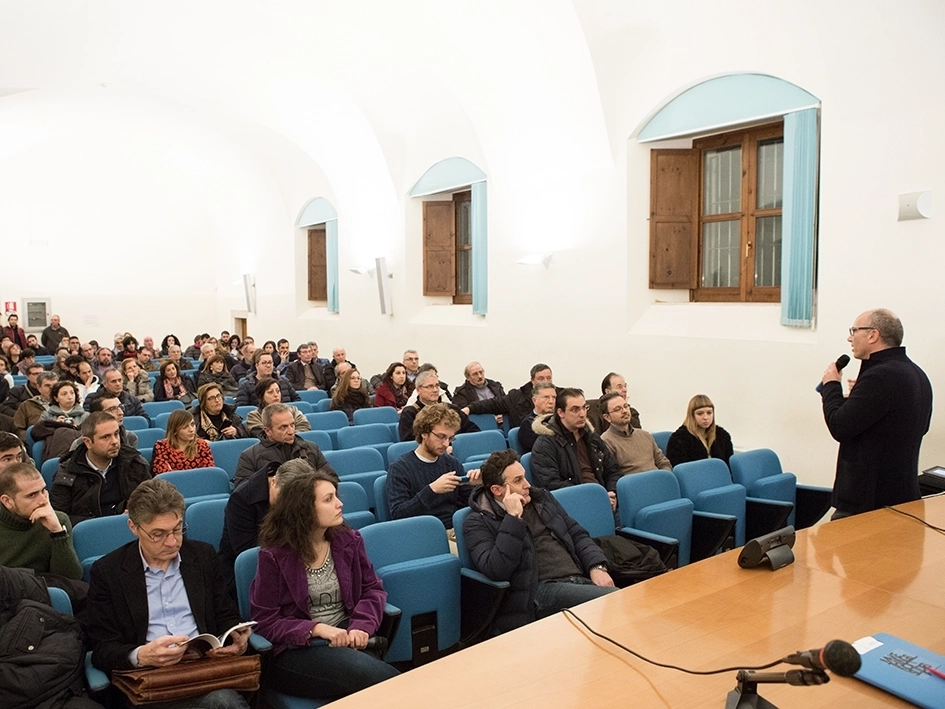
Meeting of the MASKS European project, Unveiling the Arts and Works Behind the Masks. Twelve partners from four countries, among universities, museums and research centres. And me, sitting in that room, thinking: what am I doing here?

It is not the first time. It is a recurring feeling. Finding myself in settings that seemed out of reach, too big for me.


The MASKS project

MASKS brings together twelve European partners, among universities, training centres, museums and private companies, from Italy, Spain, Romania and Portugal. 

The lead organisation for the project is the University of Valladolid, coordinated by Professor Maria Pilar Panero.

Editrice L'Immagine coordinates the communication and promotion of the project. Put that way, it sounded enormous. We said yes anyway, because we believed in it.


The mathematics of courage

Every impossible of yesterday is the normal of today. Looking back at my path, I recognise the moments when I said let us try without having all the answers. Every time I bet on an idea beyond my reach, I was building the road to unthinkable places. It is not magic. It is trust, in yourself and in others. It is saying yes before you know how.


The price of courage

The secret is to start. Even at the risk of taking a few slaps. And the slaps come. Projects that never take off, partnerships cut short, bets lost. But every failure was a lesson that brought me here, to this room in Bragança. There is no growth without risk.


The masks we wear

Working with masks carries its own symbolism. The ancient ones tell of transformations, of the ability to go beyond limits. We wear everyday masks too. Fears, doubts, the not good enough. The challenge is to recognise when that "what am I doing here?" is not realism, but fear in disguise.

If you have asked yourself the same, in a setting that felt too big, it is the sign that you are on the right road. That will always be the finest question to ask.


The MASKS project is co-funded by the Erasmus+ programme of the European Union.


ps. a sincere thank you to Marica Petruzzella for the logistical support and for handling the relationship with the partners.

Photo by Gaetano Armenio.


Watch the video


Notes from Bragança

WHAT AM I ...

23 September 2026

Four hours aboard the fishing boats for the sea procession of Molfetta, feast of Maria SS dei Martiri, patron saint of the town.

The sacred, the profane and a sign read backwards.


What am I doing here. Inside the sea procession of Molfetta

S"What am I doing here?" is a question I have asked myself many times, in my working life and outside it. It comes when you feel out of place, when your being somewhere has no obvious reason. And yet the urge to explore new ground always pushes me to try, because curiosity is an incurable disease.


Luckily, I would add.I had been invited by Mimmo Facchini, a friend and a former boat owner, for two reasons that hold together, because he thinks I am a capable photographer and because this year the draw had gone to his cousin's fishing boat, the Nuovo Saturno, given that in Molfetta who carries the statue out to sea is decided neither by money nor by family name but by a lottery, and when your turn comes it rarely comes again.


He asked me aboard for the sea procession of 8 September, the feast of Maria Santissima dei Martiri, four hours from four in the afternoon until eight in the evening with no way of getting off, and I accepted late and rather badly, out of curiosity more than courage.


The comfortable side of the barrier

I have worked on patron saint rites since 2006, with Settimana Santa in Puglia and then with Patroni di Puglia, and for years I have been building stories about popular devotion while always standing on the spectator's side, with the good spot, the light worked out in advance and the freedom to leave whenever I felt like it. I found myself surrounded by people I did not know, faces I had never seen before, and in Molfetta that does not happen, because I do not live in a big city and here you know everyone at least by sight. Not them. Not one.


On board that freedom does not exist, and this is what changes everything, because for the first two hours I did nothing but trip over everything and bang my head on hatches built for men shorter than me, while my only thought was not to end up in the water, which is to say that anthropology, seen from the inside, is done mostly with your knees.


What you cannot see from the shore

Then at some point I stopped defending myself and I looked, and there was an old man beating a bass drum standing on planks that moved, and a man diving in fully dressed while the cathedral slid past behind him, and a friar talking to the sailors and gesturing towards the harbour, and wedged between two boards of the deck a pale blue card with Ave Maria printed on it, fallen and trodden on, which nobody all afternoon could be bothered to pick up. People sang, danced and prayed.


And this is what you cannot grasp from the shore, because here the sacred and the profane do not take turns but live together in the same square metre of deck and in the same minute, so much so that on that afternoon Maria Santissima dei Martiri was travelling on the deck of a boat named after a Roman god, and nobody had noticed, myself first of all.


At eight I came down wrecked, with the feeling that I had spent fifteen years photographing the side the feast shows to outsiders.


photo by Gaetano Armenio


Four hours inside the sea procession of Molfetta, the feast of Maria Santissima dei Martiri, told by someone who has designed and photographed popular rites since 2006

SANTA ...

4 March 2026

1996-2026. Thirty years of music, identity and shared passion.

There's one photograph in the exhibition that stopped me more than the others. A girl with her eyes closed, the clarinet resting against her forehead. No audience, no procession, no uniform in the foreground. Just concentration.

I built and shot that photo myself. I had many musicians in front of me, and I chose her. For her face, for the delicacy of the expression, but above all because she captures the environment I found when I joined the Associazione Musicale Santa Cecilia: surprisingly young. In that moment I also understood how to tell these thirty years. Not with a sequence of photographs, but with a story.


Designing a cultural event: turning memory into narrative

For me, designing cultural events is exactly this: turning images, memory and people into a story that can speak to a community. It's the work I've done for over forty-five years, across graphic design, publishing, photography and visual identity. And it's probably also the reason I was asked to coordinate this photographic exhibition.

The "best of youth" is not a slogan. They are the boys and girls who come to the association every day. The ones who study, rehearse, get it wrong, try again. The ones who choose to give their time to something that isn't only performance, but belonging.


On 22 April 1996, fifteen people decided Molfetta deserved a musical voice of its own. Since then that choice has become a path, a school, a discipline, a community. When I started working on the exhibition I understood right away that celebrating an anniversary wasn't enough. I had to give back the meaning of what this band represents for the city. So the exhibition runs through thirty years like a family album: from the founders to today's young players, from rehearsals to processions, from patron saint feasts to summer evenings.


A confession

While selecting the images, I felt a touch of envy. Not for the thirty years of history. For that quiet determination I see in their eyes. For the ability to stand inside a tradition without carrying it as a weight, but as a privilege.


A band that grows from below

The Banda Santa Cecilia is not only the soundtrack of Holy Week, the patron saint feast or Christmas among the alleys. It's a place of growth. A school of collective responsibility. A training ground in listening to one another.

The exhibition stays at the Sala dei Templari, in Molfetta, until 9 April 2026. That girl with the clarinet is there, among the others. Her eyes still closed.


How I designed the exhibition for thirty years of the Banda Santa Cecilia, between photography and community memory

HOLY WEEK ...

27 March 2026

Holy Week in Apulia: from the Gargano to the Salento, how I have built up a network of twenty-two municipalities since 2008 to jointly promote the Easter celebrations.


"Who are you?"

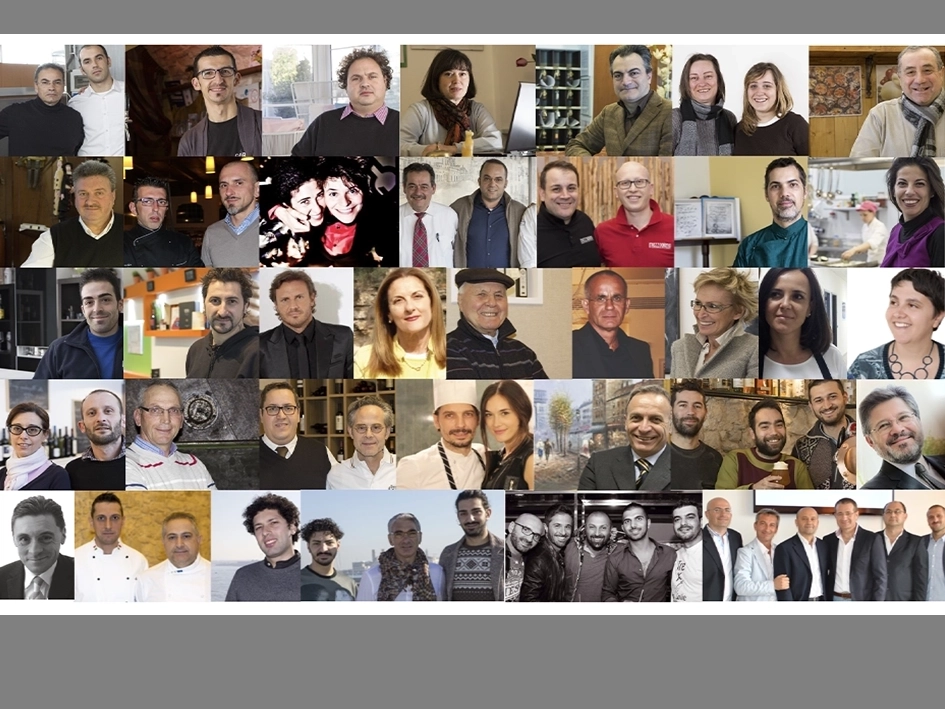
When a question at a trade fair is worth more than a business plan At the Apulia Region’s stand during a trade fair, a manager came up to me. She looked at me, somewhat puzzled: “Who are you?” A fair question. Standing before her was someone with no official role, no party membership, and no regional office to back them up. However, he had managed to persuade twenty-two municipalities in Apulia to pay a registration fee for a joint project to promote Holy Week rituals. 

I thought about it for a moment. Then I smiled.

From ‘just Molfetta’ to the whole of Apulia

From the BIT in Milan to the Molfetta information point, and in the aisles of trade fairs, the question was always the same: "It's lovely… but is it just Molfetta? Isn't there anything else in Apulia?" Those who had experienced the processions in the dark, the drums, and the silence that weighs like a stone, wanted more. And that ‘more’ did exist. From the Gargano to Salento, every town had its own Easter traditions, its own processions, and its own communities that came together every year. But no one told their stories together. Each village went its own way, like islands in an uncharted archipelago.


In 2008, I started making phone calls.

Initial sign-ups: ten local councils. Then word of mouth and meetings. Ten became twenty-two. A regional network has been established, organised into themed routes: Gargano and Daunia, Imperial Apulia, Bari and the Trulli Coast, Salento, and Magna Graecia. Councillor Guglielmo Minervini puts me in touch with Massimo Ostillio, the councillor for tourism. They like the idea. The project is taking on a regional dimension.

The work that goes unseen

Behind every procession lies the work of skilled craftsmen. Research, analysis and a set of quality standards to ensure a warm welcome and basic services. Then there are the tools: a bilingual guide, a website, a presence at trade fairs, and a stand at Bari Airport to engage with arriving and departing passengers. The aim was clear: to spread tourism throughout the year. To use Holy Week in Apulia as a catalyst for travel, rather than the usual summer beach season. Roots instead of a parasol. An opportunity to discover the region’s beauty through its landscapes, art and food and wine.


The best ideas don’t come from the office

They come from listening to tourists and travellers who ask questions and seek ‘authenticity’. That question – "But only Molfetta?" – was already the answer. We just had to take it seriously. And when a manager asks you, "Who are you, anyway?", perhaps that’s a sign that the invisible work has started to show itself.


How I built, with no official role, a tourism and cultural marketing network across twenty-two towns