Blog

BLOG

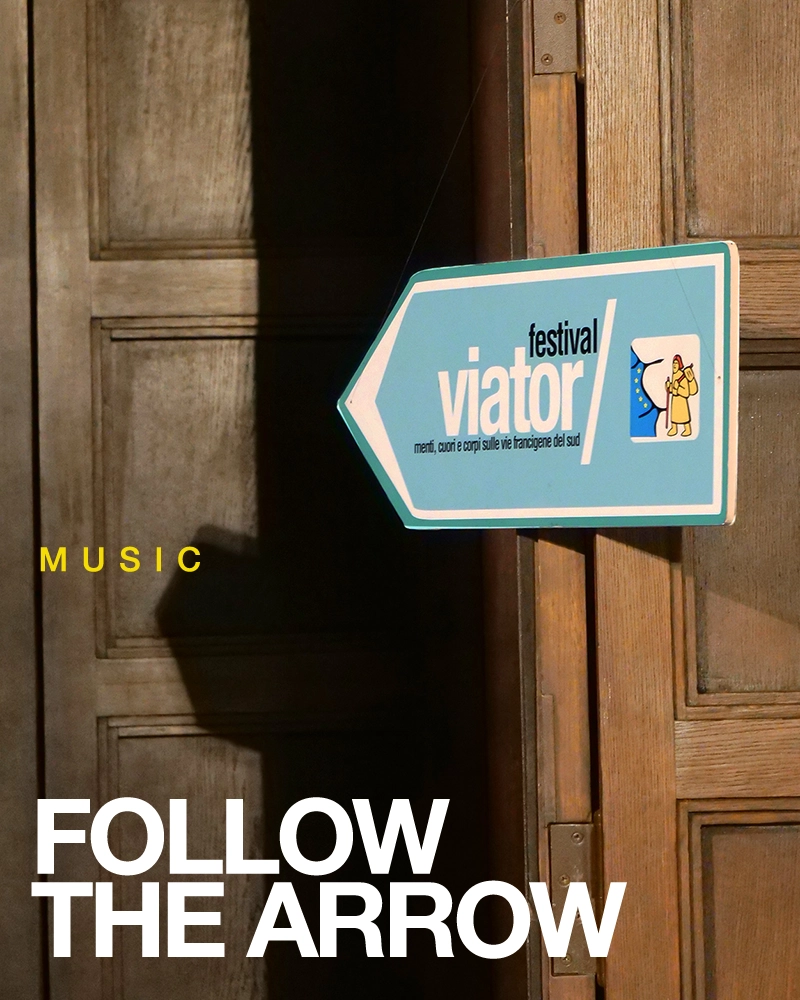
FOLLOW THE ARROW

29 October 2026

On 8 November, in Molfetta, Festival Viator opens with a title even altar boys know: In principio erat verbum. Two weeks later, on 21 November, in the abbey of Santa Maria La Sanità del Casale in Pisticci (MT), on the eve of Saint Cecilia, patron saint of musicians, the town band answers with another title: In principio era il suono, in the beginning was the sound.

Two different beginnings on the same programme. The theme of the 12th edition is LOGOS, and apparently it allows more than one answer.


Festival Viator, directed by Giovannangelo de Gennaro and Michele Lobaccaro, brings music to the Southern Via Francigena from 8 November to 20 December 2026, with concerts in Puglia, Lombardy, Basilicata and Sicily. I have followed it closely since 2021, and I told how it grew in the project page.


What LOGOS means

In Greek, logos means word, speech, reason, measure. The Gospel of John places it at the beginning of everything, and the festival’s subtitle says where this word has to reach: minds, hearts and bodies.

For anyone who walks, the first word you meet on the road is an arrow showing you the way.


In the programme Italian is not enough. There is Xenia, Greek for hospitality, Aion, time, and dhrupad, the sacred chant of India.


Sabir, the language of travellers

In Calvisano (BS), on 8 December, Stefano Saletti and Banda Ikona Trio present Sabir, il Logos del Mediterraneo. Sabir was the lingua franca of the ports, a mix of Italian, Spanish, Arabic and Greek that was nobody’s mother tongue and helped merchants understand each other. With no homeland and no official grammar, it lasted for centuries. In a port town like Molfetta, the idea doesn’t sound strange.


In Molfetta the word moves house every evening

Here the festival lives in the churches of San Bernardino, the Immacolata, Sant’Andrea and San Domenico, the Diocesan Museum and the Cittadella degli Artisti. On 14 November Ciro Montanari’s tabla meets Virginia Nicoli’s dhrupad singing. On the 29th, at Conterosso Social Club, Valeria Sturba and Vincenzo Vasi play Dada music on a theremin, an instrument you play without touching it, moving your hands through the air.


On 27 November the Cittadella screens Santiago by Yann Samuell and hosts a talk with people who accompany fragile teenagers along the walking routes.

The festival closes on 20 December with Brigan and a title that is neither word nor sound: Luna, cera e vino, moon, wax and wine.


Festival Viator 12th edition | LOGOS
Molfetta, 8 November to 20 December 2026, 8.30 pm
Churches of San Bernardino, Immacolata, Sant’Andrea, San Domenico | Diocesan Museum | Cittadella degli Artisti | Conterosso Social Club
Info: +39 340 619 0019 (WhatsApp only) | festivalviator.it


THERE'S NOTHING HERE

15 October 2026

I'm holding a guide to Molfetta that I laid out myself: I recognise the photos, the ten itineraries and, on the last pages, the names. Hotels, restaurants, tour guides from my town, people I know by name, and I even know where they have their morning coffee. This is VisitMolfetta, the tourism promotion project I built for Molfetta together with them.


From "there's nothing here" to ten itineraries

It all began with a line I heard at every meeting with the local tourism sector: "Why would a tourist stop here? There's nothing." The people saying it were the very ones who made a living from tourists.

I thought the opposite. Every town has its genius loci, it's just that the people who live there walk past it every morning and no longer see it. So I looked at Molfetta as if I hadn't been born there: the harbour, the Cathedral on the sea, the Easter processions, the September feast, the shipyards, the summer nights.


Out of that supposed nothing came ten itineraries, each with its own name and soul. I turned them into three tools: a pocket guide in Italian, English and German, a multilingual web portal, www.visitmolfetta.it, and a daily story on social media.


A guide nobody could pay for alone

My job, which others call tourism and cultural marketing, was to bring those two worlds to the same table. The Municipality put in a tiny share of the funding (no comment) and access to trade fairs inside the Apulia Region stand. The private businesses provided most of the budget and, above all, their faces: if a tourist came to Molfetta, the game would be played in their rooms and at their tables.


Winning them over one at a time

There was no decisive meeting. The sceptics weren't one or two to convince: they were all of them. I took them on one by one, always facing the same objection.

I'll confess something. Harder than the design, the copy and the translations was holding together people who, the day before, had been competing on the same street. A public-private network isn't signed. It's built one phone call at a time, and with every call you risk losing it.


Tourists buy a town, not a hotel

At a fair like Berlin, nobody stops for a single restaurant in a town they've never heard of. They stop for a destination. A single business can't offer one. A tourism sector that shows up united can.

That year, the tourism and cultural promotion project VisitMolfetta toured the most important national and international travel trade fairs: from the BIT in Milan to the ITB in Berlin and TTG in Rimini.


WHAT AM I DOING HERE?

23 September 2026

Four hours aboard the fishing boats for the sea procession of Molfetta, feast of Maria SS dei Martiri, patron saint of the town.

The sacred, the profane and a sign read backwards.


What am I doing here. Inside the sea procession of Molfetta

S"What am I doing here?" is a question I have asked myself many times, in my working life and outside it. It comes when you feel out of place, when your being somewhere has no obvious reason. And yet the urge to explore new ground always pushes me to try, because curiosity is an incurable disease.


Luckily, I would add.I had been invited by Mimmo Facchini, a friend and a former boat owner, for two reasons that hold together, because he thinks I am a capable photographer and because this year the draw had gone to his cousin's fishing boat, the Nuovo Saturno, given that in Molfetta who carries the statue out to sea is decided neither by money nor by family name but by a lottery, and when your turn comes it rarely comes again.


He asked me aboard for the sea procession of 8 September, the feast of Maria Santissima dei Martiri, four hours from four in the afternoon until eight in the evening with no way of getting off, and I accepted late and rather badly, out of curiosity more than courage.


The comfortable side of the barrier

I have worked on patron saint rites since 2006, with Settimana Santa in Puglia and then with Patroni di Puglia, and for years I have been building stories about popular devotion while always standing on the spectator's side, with the good spot, the light worked out in advance and the freedom to leave whenever I felt like it. I found myself surrounded by people I did not know, faces I had never seen before, and in Molfetta that does not happen, because I do not live in a big city and here you know everyone at least by sight. Not them. Not one.


On board that freedom does not exist, and this is what changes everything, because for the first two hours I did nothing but trip over everything and bang my head on hatches built for men shorter than me, while my only thought was not to end up in the water, which is to say that anthropology, seen from the inside, is done mostly with your knees.


What you cannot see from the shore

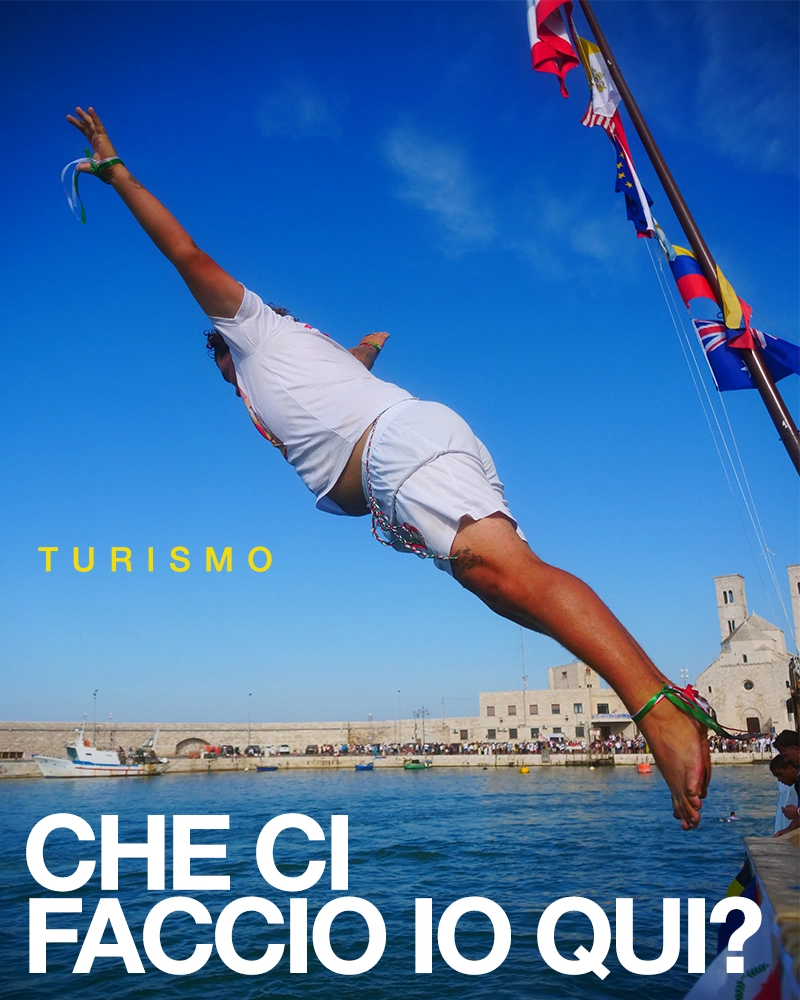
Then at some point I stopped defending myself and I looked, and there was an old man beating a bass drum standing on planks that moved, and a man diving in fully dressed while the cathedral slid past behind him, and a friar talking to the sailors and gesturing towards the harbour, and wedged between two boards of the deck a pale blue card with Ave Maria printed on it, fallen and trodden on, which nobody all afternoon could be bothered to pick up. People sang, danced and prayed.


And this is what you cannot grasp from the shore, because here the sacred and the profane do not take turns but live together in the same square metre of deck and in the same minute, so much so that on that afternoon Maria Santissima dei Martiri was travelling on the deck of a boat named after a Roman god, and nobody had noticed, myself first of all.


At eight I came down wrecked, with the feeling that I had spent fifteen years photographing the side the feast shows to outsiders.


photo by Gaetano Armenio


THE TEMPTATIONS OF TOURISM

August 31, 2026

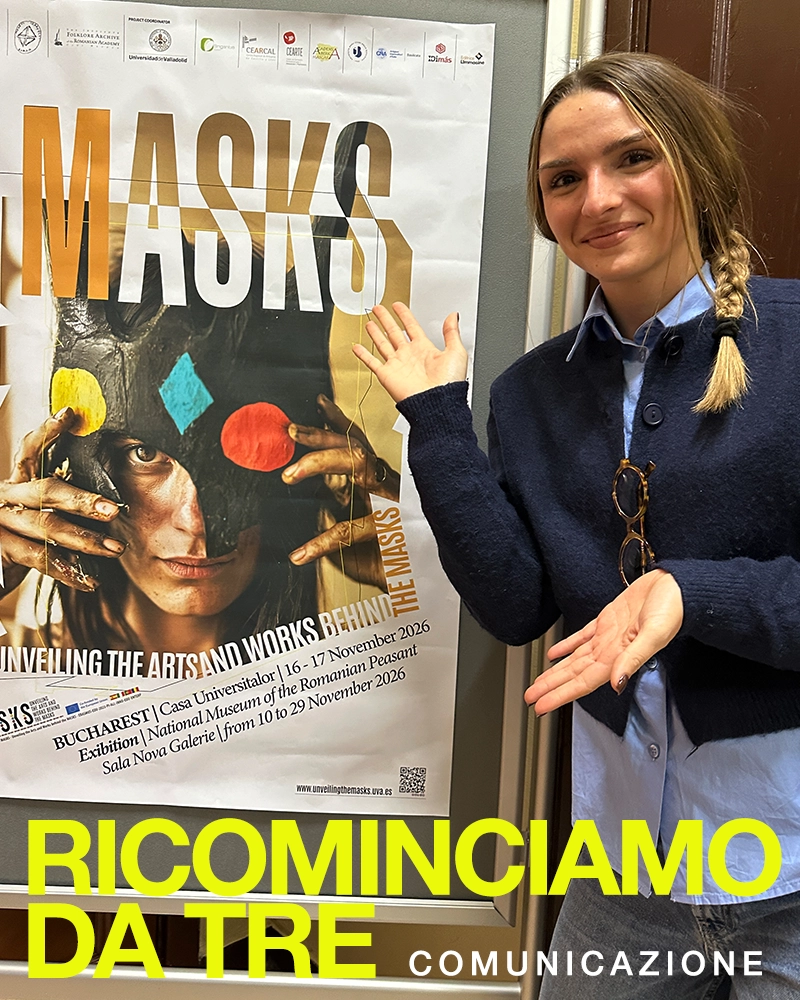
I expected to tell the story of Tricarico's anthropological masks through a camera. Instead, the Pro Loco asked me to sit at a table and talk about tourism, cultural tourism, I add that part myself.


When the rite becomes a show

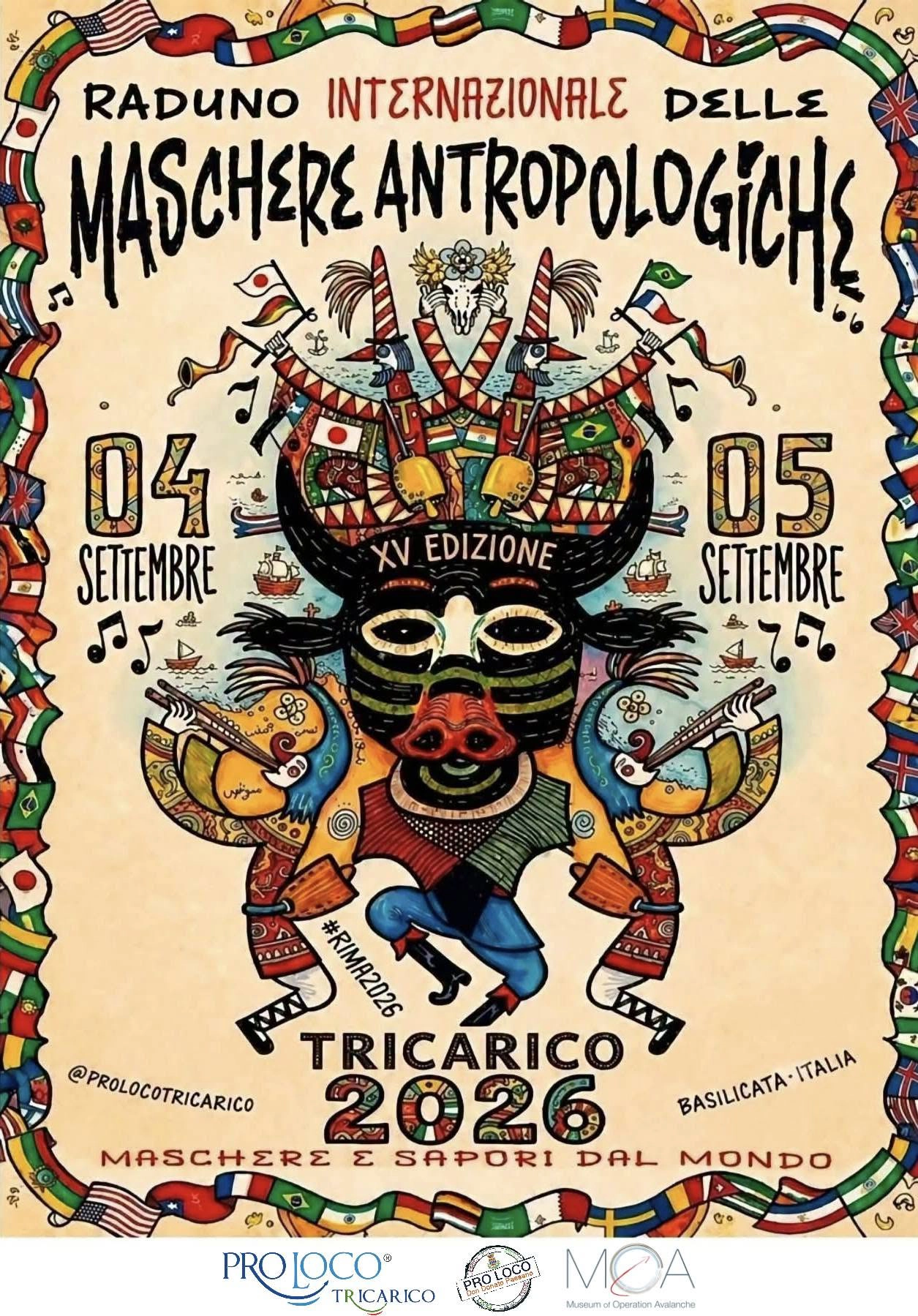
The title of the meeting, on September 5 at 10:45 in the Villetta Comunale Massaioli, is blunt: "The Temptations of Tourism". It happens inside the 15th edition of the International Gathering of Anthropological Masks of Tricarico (MT), in Basilicata, where this year sixteen groups from Spain, Portugal, Bulgaria, Ecuador, Bolivia and Peru parade alongside the town's own cows and bulls, and l'Mash-kr, the mask born from the feast of Saint Anthony the Abbot on January 17.


The gathering has existed since 2011, wanted by the Pro Loco and the town council to open the Arab-Norman old town to an outside audience. Three days of parades, food and wine stands and conferences, with a theme that already says it all: "Masks and Flavours from the World".

The temptation is always the same, in every territory I have crossed over the past twenty years: turn a rite into a product because it draws more people, and find out afterwards that people came precisely because it wasn't one.


You don't go alone

At the table, alongside an anthropologist from Unibas, the general director of APT Basilicata, a journalist and documentary maker, and the coordinator of the MASKS project for CNA Matera, I'll bring a conviction that didn't start on Friday: when you speak alone, the world struggles to listen.


I've tested this three times. In 2008 I brought twenty-two towns in Apulia together around the rites of Holy Week. In 2011, with Silvia Godelli, then regional tourism councillor, I did the same with patron saint festivals: that's how the Patroni di Puglia brand, thirty-two towns, was born. In 2021, in the middle of the pandemic, the same idea became Pugliautentica.it, the Apulia you've never seen: fourteen towns, fifteen food and farming businesses, one single proposal instead of fifteen disconnected voices.


Three networks, one rule

Three different networks, the same rule: a tradition on its own doesn't become a product you can sell on national and international tourism markets. It needs a recognisable identity, authentic, not inflated. And behind the identity, real promotion and commercial work, not just storytelling. I'm not sure saying so is enough. I know I've seen it work while following the MASKS project's European campaign among the caretos of Bragança and the zoomorphic masks of half of Europe: without the network of twelve partners holding the project together, every mask would have stayed a local matter.


How do you make a tradition known without making it disappear inside its own success. Communication, done well, doesn't distort a town's anthropological masks. It protects them.

Tricarico is trying to do the same, with cows, bulls and cowbells instead of caretos. It's the same problem faced by a hundred small Italian towns that open their doors without knowing how wide.

We'll see what comes out of the discussion, on September 5.


The round-table discussion and who will be there

At the "Temptations of Tourism" table, together with me (I handle communication for the European MASKS project), are:

Margherita Sarli, general director of APT Basilicata; Vita Santoro, anthropologist and Unibas coordinator for the MASKS project; Marina Berardi, anthropologist and photographer; Antonio Di Biase, of Cooperativa Nuova Atlantide; Donatello Caivano, manager of "Il volo dell'angelo"; Leo Montemurro, president of CNA Matera and coordinator of the MASKS project; Lorenzo Scaraggi, journalist and documentary maker.


The organisational contact for Pro Loco Tricarico is Giuseppe Fedele.


SOVERETO FESTIVAL 2026

11 August 2026

The 14th edition of the Sovereto Festival in Terlizzi, taking place from 21 to 23 August, has ‘Migration’ as its theme. I’ll explain how I developed the event’s communications strategy.


MIGRATIONS, and my first departure


A mural, photographed on some ordinary wall. A man standing next to a car, and above him a line: "no country for old men". I took the shot, and I decided it would be the opening image of this piece. Because we always picture migration as young, when in fact it happens at any age.

The 14th edition of the Sovereto Festival, in Terlizzi from 21 to 23 August, holds on to the same word as last year: Migrations. Plural, which is the whole point. Peoples, languages, sounds, memories. I am handling the communication again, and I have circled this word for a long time.


The first time I left

I was eighteen. I left for Milan. I do not remember the suitcase, I remember the feeling: that real life started somewhere else, and that I had to go and reach it. Then I came back to Apulia, and I have never really moved since. But I still carry that departure with me. Whoever has left once recognises the others who are leaving. One look at the station is enough.

That is why the mural stopped me. The man next to the car could be me at eighteen. It could be you.

Then I understood something. Since 1980 I have never moved house, yet I have changed trade several times: sales, graphics, publishing, packaging. You migrate while standing still too. You change the horizon, not the address.


Music walks, and so does its director

Every sound we know comes from somewhere else. The blues is the toil of the fields turned into voice. Jazz is a harbour. The Sardinian launeddas are older than almost everything, yet they sound new. Bringing together Mediterranean, jazz, Sardinian and contemporary sounds is not filling a programme. It is showing that a culture only stands up when it meets the others.


Artistic direction is by Giovannangelo de Gennaro. The same restless soul who, back in the Festival Viator days, bombarded me with programmes over WhatsApp while I sent him Neffa's "Molto calmo", with no effect whatsoever. But Giovannangelo is a real walker, one who draws from the via francigena, from the silence between one note and the next. A festival about Migrations you hand to someone like that. To someone who has made music a journey.

A footprint, after all, is proof that someone passed through. Not that they stopped. Like me at eighteen. Like that man on the wall, who no, does not wait for anyone's permission to hit the road again.


Sovereto Festival 2026: dates, venue and practical information

The 14th edition of the Sovereto Festival takes place in Borgo Sovereto, Terlizzi, in the province of Bari, from Friday 21 to Sunday 23 August 2026. All events are free and open to the public.

For three days the old village turns into a cultural space spread across streets and squares: concerts, talks, book presentations, workshops for children and adults, choral singing sessions, art installations and the self-production market. The music moves across jazz, world music, folk repertoires and contemporary experimentation.

Artistic direction by Giovannangelo de Gennaro, under the patronage of the Municipality of Terlizzi, Department of Culture.


The programme of the three evenings

Friday 21 August

8.00 pm Presentation of "Me la sono andata a cercare. Diari di una reporter di guerra" (Laterza 2025). The author Giuliana Sgrena in conversation with Gianpaolo Altamura. Institutional greetings from Mayor Michelangelo De Chirico and Culture Councillor Daniela Zappatore. In collaboration with the research group S/Murare il Mediterraneo.

9.30 pm Andrea Marchesino, Gargano Blues. Andrea Marchesino guitars, Andrea Resce bass, Michele de Costanzo drums.

Saturday 22 August

6.30 pm near Suberito Bar. Semi dal mondo, eco-workshop by BimBumBam, for children aged 5 and over.

7.00 pm Traversa del Santuario. Presentation of "La rosa di Gaza" (Les Flâneurs 2026). Co-editor Lucia Cupertino in conversation with Pasquale Vitagliano, with a contribution by Mariastella Dilillo, Médecins Sans Frontières office in Barletta.

8.30 pm Lisa Manosperti, Uncaged Bird, a tribute to Abbey Lincoln. Lisa Manosperti voice, Roberto Ottaviano saxophones, Umberto Petrin piano.

10.00 pm Moving Clouds, Oltre confine, thirtieth anniversary live set. Giuseppe Porsia flutes and guitar, Luigi Sforza guitars, Marcello Zinni piano and keyboards, Giorgio Vendola double bass and electric bass, Michele Perruggini drums and percussion.

Sunday 23 August

10.00 am in the village. Coro sociale, a workshop on the voice as a sound source. Open air session led by Giovannangelo de Gennaro.

6.30 pm near Suberito Bar. Approdi, di città in città, a writing and reading workshop by Le Città Invisibili, for children aged 5 and over.

7.00 pm Traversa del Santuario. Andiamo a fare la Merica, the great Italian emigration to the USA. Open air lecture by Francesco Vino.

8.30 pm Gavino Murgia, Sonos Disterraos. Saxophones, sulitu, launeddas, bassu a tenore, samplers.

10.00 pm Duo Petti & Molino, Jouer de la musique. Manuel Petti accordion, Marco Molino vibraphone and percussion.

Throughout the festival

"Festa Maggiore Terlizzi, Sovereto", photographic installation by Maria Pansini. From 6.00 pm, the self-production market.