gaetano-armenio-blog.webp

BLOG

contenuto-img1

4 November 2025

Over the last fifteen years, November has taken on a dual significance that goes beyond simply reminding me of the passing of the years. And November is my birthday.


The night

It was November 2010. The pain came suddenly. First the emergency room, a Buscopan drip and off home. But in the night the pain came back, meaner, deeper. A second doctor, serious face. "Immediate admission." "Can we put it off to Monday?" I asked. "Mr. Armenio, you risk not making it to Monday." Panic. A week in Molfetta. Then San Giovanni Rotondo. "Cyst on the pancreas, immediate surgery." "But I'm not famous like Steve Jobs," I tried to make light of it. Ten hours in the operating theatre. That night, internal haemorrhage. My wife waiting outside, while the head surgeon told her:

Madam, take heart – we’re losing him.


I don't know what she felt in that moment. I never really asked her. Maybe because certain things are better left where they are. Once they've passed, it's better to look at them from a distance.


What remains

The body carries the marks, the scars are there to remind me I was on the edge and came back. I learned that time isn't infinite. We all know it, of course. But knowing it and feeling it on your skin are two different things.

Since then every day counts a little more. I learned to recognise the real people. The ones who stay when everything falls apart, the ones who say "I'm here" and truly are, not just in words. And I learned that authenticity isn't an aesthetic choice, it's a necessity. When you've looked death in the face, you no longer feel like pretending to be someone you're not.

Since then every project, every story, every connection carries a piece of that night.


The encounter

In those hospital days, in San Giovanni Rotondo, I met Nicola. From San Severo. He told me about his traditions, about the patron saint festival. "Gaetano, if we get out of this room alive, in May you come to San Severo for the festival. You have to see it." I went. And from that encounter, from that visit, came one of the most important projects of my career:Patroni di Puglia. A project that involved 32 towns, that became a boxed set requested by the President of the Republic, that turned local traditions into shared heritage.


But that's another story. And I'll tell it to you in the coming days.


contenuto-img1

30 October 2025

When a public official leaves you high and dry.


We leave via Francesco Nullo and end up in via don Minzoni. New premises, new machinery, three partners: me, Giovanni Gadaleta and Stefano Salvemini. The Cooperativa L'Immagine was by now a memory, and we were convinced we'd made it.

Then came that tender. A large public body, huge quantities, a financial commitment that made your legs shake. But we won. And we thought it was the turning point. Contract in hand: first payment after 90 days. Six months passed. We didn't see a lira.


Every morning the same scene

I'd show up, desperate, at the accounts office. Always the same office, the same faces, the same answer: "We're checking, come back tomorrow." The suppliers were pushing. One of them I found waiting outside my front door. For months we couldn't pay our two collaborators on time, and our own salaries were a beautiful fantasy. One morning we asked them to be patient a little longer. The next day, no one showed up at the company.


The sentence that still stings

I went back to the body for the umpteenth time to beg them to release the invoices. The official, who happened to be from Molfetta, a fellow townsman, looked at me from behind his tidy desk. You know what he said? "Oh, what a fuss, you're young. Go to your family and get them to lend you the money."

I stood there, silent. Not for lack of words, but because in that moment I understood everything. That our laid-off collaborators weren't his problem. That our sleepless nights were none of his concern.


The choice

Giovanni decided to leave. Stefano and I were left alone, looking at each other. The question was simple and terrible: do we close or do we go on? We chose to go on.

That crisis taught us what resilience really means. In a South where doing business means, still today, walking the tightrope between money that never arrives and suppliers who push, we chose not to fall. That sentence comes back to me every time I sign a contract with a public body. Not out of resentment, but out of vigilance. Because I know that behind every late payment there's still someone ready to say "ask your family." And we, instead, are still here. Doing business. In spite of everything.


contenuto-img1

22 October 2025

I'm borrowing the title of a film currently in cinemas.


Neffa didn't work

When the WhatsApp message from Giovannangelo de Gennaro arrives, one of the two artistic directors of the Viator Festival (the other is the musician Michele Lobaccaro), announcing the programme, I get a burning in my stomach. He's hyper-anxious, and it was no use sending him Neffa's "Molto calmo" several times. No effect. I have to prepare all the communication, online and offline. Start from the first layout proposal and produce a whole avalanche of others.


However you do them, they're never right

In the end, exhausted, I drop everything and we go ahead with what he'd already decided from the start. He offers a false democracy, then accepts what he himself proposed. I wonder if he takes pleasure in sending me round in circles. But they say artists are like that.


The wandering musician and the birth of "Solitudo"

And yet, behind this apparent creative chaos hides a precise method. Giovannangelo is a true wandering musician, a walker who draws inspiration from his pilgrimages along the Via Francigena and the spiritual paths of Italy. His artistic communication is born from footsteps, from the silence between one note and the next, from that deep listening only the solitude of the wanderer can teach.

"This year the theme is solitude: the wanderer's inner companion, music born of silence," he says. An insight matured during his many journeys, where the graphics of ancient stones meet a score written by the wind.


The spiritual impact of the Viator Festival

Viator 2025 will cross four regions, Apulia, Basilicata, Molise and Lombardy, turning each stop into a musical rite. Music becomes a universal language uniting different cultures, while the festival's communication takes on a deeply spiritual dimension. Compared to other festivals, Viator recovers the spiritual dimension of travel and turns the audience into sound pilgrims. The graphics themselves, that solitary silhouette between stone arches, convey the message without words.

The journey begins now, in this moment of listening. Because the true communication of Viator doesn't start from the stages, but from the silence before each note, from that solitude that becomes presence.

Music is the step. Silence, the direction.


contenuto-img1

15 October 2025

The 1980s. They were the years of the "riflusso," when the world changed direction.


While many looked inward

After the years of lead, people sought refuge in private life: consumption, television, comfort. Here we had "Milano da bere," and the culture of image replaced the culture of commitment. While many closed themselves into their own small horizon, others still tried to look outward, toward those left on the margins. Like don Tonino Bello, then bishop of the diocese of Molfetta, Giovinazzo, Ruvo di Puglia and Terlizzi.


It was 1987

Through a mutual friend a request reached me. "Gaetano, don Tonino is starting a community in Ruvo di Puglia. It's called C.A.S.A. It will take in young drug addicts. They're launching a screen-printing workshop and they'd need someone to follow them." I accepted without thinking too much about it. Those were years when heroin had invaded the squares of the country, and of course of my city too, leaving emptiness in people's eyes and silence in families.


The house and the motorbike

The community was taking its first steps amid a thousand difficulties and prejudices. It was a small house along the Terlizzi-Ruvo di Puglia provincial road. At first I'd arrive by motorbike, always my companion of freedom. Until one evening don Nino, who coordinated the house, took me aside. "Gaetano, I'm asking you a favour. Don't come by motorbike anymore. That noise creates too much excitement in the boys." From then on, with the Fiat Fiorino, every evening I'd cross that gate in silence, with respect.


The screen-printing workshop

I taught the young people to print in screen-printing. The ink, the frames, the colours became a way to give shape to something new. Every gesture was an act of trust. Often I'd stay for dinner with them. Some evenings were hard, shouting, breakdowns, sudden escapes, but even in those moments you could feel the stubborn heartbeat of life wanting to begin again.


The names and the memory

Alfonso, Teresa, Katia, Anna. These are names I still carry with me, like marks etched in time. With some of them we met again, years later. With others, it's better to leave them in silence. But each of them taught me that solidarity isn't an abstract feeling: it's presence and listening.

Today, looking back on those years, I understand that those "kids on the outside" weren't only them. We were all outside, of a time that was changing, of a distracted society, of ourselves. And yet, in that small house on the provincial road, we found a direction: to come back inside life, together.


contenuto-img1

9 October 2025

When a label draws you into a story of dust and wonder.


Hands that light fires

Light a fire, sings the Italian rocker Giorgio Canali. The hands of young Nicola Chiarappa, instead, know how to light fires that make you dream. And sometimes explode.

A few days ago I was in San Severo to deliver the reel-fed adhesive labels he uses for his products, including those bound for abroad. Five minutes of work. Signature, goodbye, back on the road. Instead I stopped. Sometimes you just need to slow down for a moment to discover stories worth telling.

Nicola is the fourth generation of a family of fireworks makers. His workshop is made of powders that look harmless and eyes that shine with something between passion and lucid madness.


Everything strictly by hand

The mixing of the colours? By hand. The assembly? By hand. Every single firework? By hand. Real craftsmanship, the kind that keeps you busy 365 days a year. Only January is sacred. That one you devote to family, Nicola tells me.


When scissors become fuses

"The danger is always there. All it takes is a pair of scissors to fall and, if the floor isn't clean, everything goes up." As he speaks, I instinctively look at the ground. I see no scissors. Clean floor. I breathe. Behind those fires that hypnotise us there's a world where one wrong move changes everyone's day.


Twelve years old and the perfect disaster

The first time Nicola directed a fireworks show he was twelve. Nothing exploded. Total silence. Disappointed crowd. His father at the microphone, apologising. "From there I never stopped." That scar you carry with you. It's the price of learning that gunpowder doesn't forgive haste.


From the great-grandfather's notebook to the digital simulator

His great-grandfather drew the choreographies in worn notebooks, with tempera colours. He tested them live, in front of the audience. Today there's a digital simulator that previews every effect. But the heart is still there, in those faded drawings. Tradition and technology. Ancient powder and modern software.


The batteria sanseverese: when the people rebel

The prefect bans fireworks displays during the feast of the Madonna del Soccorso. A popular revolt in San Severo. The solution? Reduce the charge. That's how the "batteria sanseverese" was born: less powerful, safer, one of a kind. An identity born from a ban. A signature that today carries the city's name around the world.


The enchantment continues

Nicola doesn't know where the company will be in twenty years. He only knows he wants to keep making people dream. And I, who spend my life among words, projects and rolls of labels, leave that workshop with one certainty: true creativity isn't inventing from nothing. It's lighting wonder where others see only dust.


contenuto-img1

20 September 2025.

I learned about the Primabio company in Rignano Garganico (FG) through word of mouth. And here I am this morning for a chat with Maria Luisa, who runs the company.


Do not slip

When you arrive you have the sacred mountain of the Gargano in front of you, and the plant at its feet. I show up in white trousers and white shoes, a fatal mistake in a farm at the height of production. "Careful, it gets slippery here" the workers tell me. But class is class. Maria Luisa welcomes me into her office. On cue I cannot find my sheet of questions, so I go freewheeling, like a chat at the bar between old friends.


From champion to Apulian entrepreneur

I find out who Maria Luisa really is. In her youth, one of the top twenty fencers in Italy at junior level. After economics in Rome and an internship at the Ministry, she chose to come back to Apulia to carry on a farming business now in its third generation.


Nickel Free passata and the Primabio numbers

In 2017 she rejoined the farming cooperative founded in 1998. The preserves department went from 30-40 thousand units to 2 million. Not bad for a woman who "understands nothing because she wears nail polish", as some local dinosaurs whisper. Since 2020, the partnership with the University of Foggia has led to the Nickel Free project: tomatoes with residue below 0.03 ppm. In practice, a passata that is easier to digest for people allergic or sensitive to nickel.


In the South, talent stays and wins

Her story fascinates me because it proves that in Apulia you can build a business, despite the daily difficulties. Maria Luisa demolishes the "you can't do it in the South" mantra. Distribution covers the Centre-South with Despar, Conad, Coop, Selex. And it is not only a matter of numbers. A fight against illegal labour and a fair price along the supply chain. Because if a passata costs less than a coffee, someone is paying the wrong bill.


The women's enterprise that changes the rules

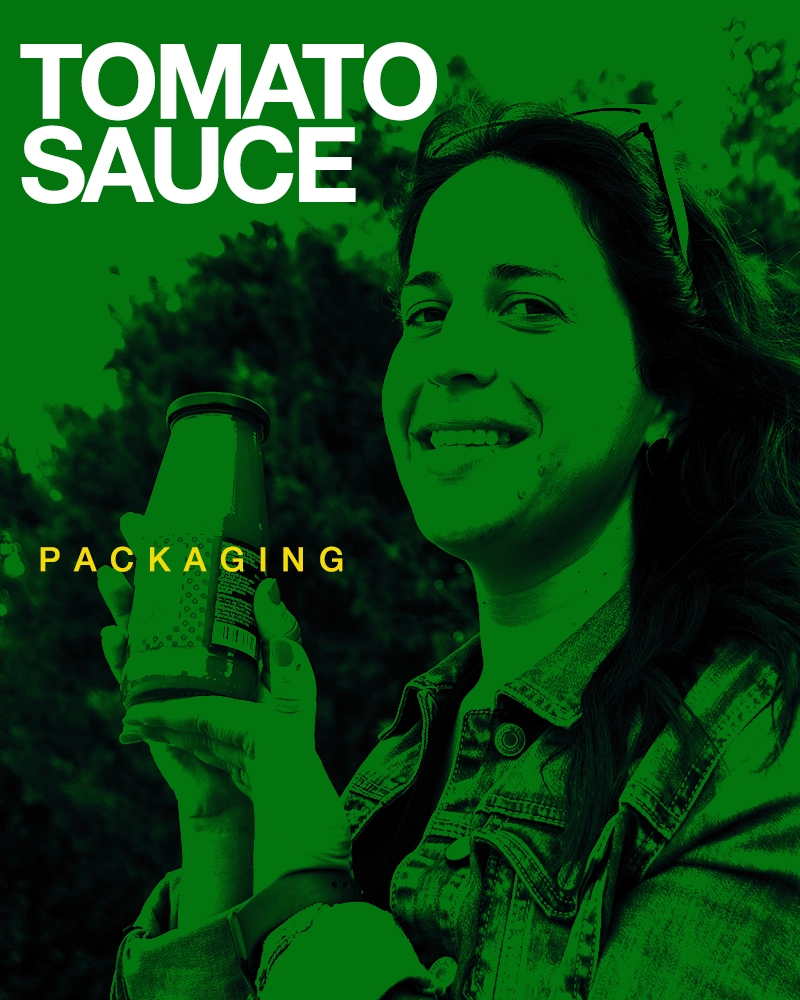
I came to talk about packaging, I leave with a lesson in women's enterprise. I saw her smile in a denim jacket, holding the jar of her passata with the same pride as her foil. Same determination, same will to win.

Tomatoes cannot lie. If you find a jar of Primabio Nickel Free passata at the supermarket, now you know the story behind the label.


Etichette L'Immagine

Primabio