jumbotrone-img

ASK YOUR FAMILY FOR THE MONEY

jumbotrone-img

ASK YOUR FAMILY FOR THE MONEY

About Us

THE ...

August 31, 2026

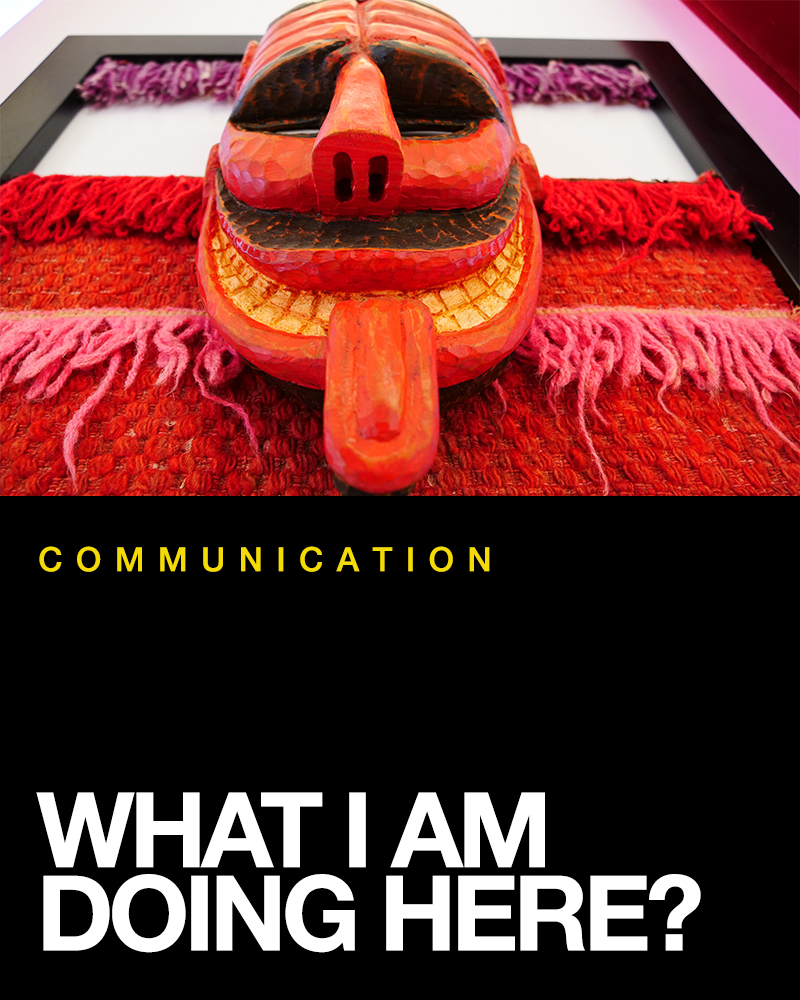
I expected to tell the story of Tricarico's anthropological masks through a camera. Instead, the Pro Loco asked me to sit at a table and talk about tourism, cultural tourism, I add that part myself.


When the rite becomes a show

The title of the meeting, on September 5 at 10:45 in the Villetta Comunale Massaioli, is blunt: "The Temptations of Tourism". It happens inside the 15th edition of the International Gathering of Anthropological Masks of Tricarico (MT), in Basilicata, where this year sixteen groups from Spain, Portugal, Bulgaria, Ecuador, Bolivia and Peru parade alongside the town's own cows and bulls, and l'Mash-kr, the mask born from the feast of Saint Anthony the Abbot on January 17.


The gathering has existed since 2011, wanted by the Pro Loco and the town council to open the Arab-Norman old town to an outside audience. Three days of parades, food and wine stands and conferences, with a theme that already says it all: "Masks and Flavours from the World".

The temptation is always the same, in every territory I have crossed over the past twenty years: turn a rite into a product because it draws more people, and find out afterwards that people came precisely because it wasn't one.


You don't go alone

At the table, alongside an anthropologist from Unibas, the general director of APT Basilicata, a journalist and documentary maker, and the coordinator of the MASKS project for CNA Matera, I'll bring a conviction that didn't start on Friday: when you speak alone, the world struggles to listen.


I've tested this three times. In 2008 I brought twenty-two towns in Apulia together around the rites of Holy Week. In 2011, with Silvia Godelli, then regional tourism councillor, I did the same with patron saint festivals: that's how the Patroni di Puglia brand, thirty-two towns, was born. In 2021, in the middle of the pandemic, the same idea became Pugliautentica.it, the Apulia you've never seen: fourteen towns, fifteen food and farming businesses, one single proposal instead of fifteen disconnected voices.


Three networks, one rule

Three different networks, the same rule: a tradition on its own doesn't become a product you can sell on national and international tourism markets. It needs a recognisable identity, authentic, not inflated. And behind the identity, real promotion and commercial work, not just storytelling. I'm not sure saying so is enough. I know I've seen it work while following the MASKS project's European campaign among the caretos of Bragança and the zoomorphic masks of half of Europe: without the network of twelve partners holding the project together, every mask would have stayed a local matter.


How do you make a tradition known without making it disappear inside its own success. Communication, done well, doesn't distort a town's anthropological masks. It protects them.

Tricarico is trying to do the same, with cows, bulls and cowbells instead of caretos. It's the same problem faced by a hundred small Italian towns that open their doors without knowing how wide.

We'll see what comes out of the discussion, on September 5.


The round-table discussion and who will be there

At the "Temptations of Tourism" table, together with me (I handle communication for the European MASKS project), are:

Margherita Sarli, general director of APT Basilicata; Vita Santoro, anthropologist and Unibas coordinator for the MASKS project; Marina Berardi, anthropologist and photographer; Antonio Di Biase, of Cooperativa Nuova Atlantide; Donatello Caivano, manager of "Il volo dell'angelo"; Leo Montemurro, president of CNA Matera and coordinator of the MASKS project; Lorenzo Scaraggi, journalist and documentary maker.


The organisational contact for Pro Loco Tricarico is Giuseppe Fedele.


I was invited to Tricarico on 5 September to discuss traditional tourism at the round-table discussion during the 15th edition of the International Gathering of Anthropological Masks.

SOVERETO ...

11 August 2026

The 14th edition of the Sovereto Festival in Terlizzi, taking place from 21 to 23 August, has ‘Migration’ as its theme. I’ll explain how I developed the event’s communications strategy.


MIGRATIONS, and my first departure


A mural, photographed on some ordinary wall. A man standing next to a car, and above him a line: "no country for old men". I took the shot, and I decided it would be the opening image of this piece. Because we always picture migration as young, when in fact it happens at any age.

The 14th edition of the Sovereto Festival, in Terlizzi from 21 to 23 August, holds on to the same word as last year: Migrations. Plural, which is the whole point. Peoples, languages, sounds, memories. I am handling the communication again, and I have circled this word for a long time.


The first time I left

I was eighteen. I left for Milan. I do not remember the suitcase, I remember the feeling: that real life started somewhere else, and that I had to go and reach it. Then I came back to Apulia, and I have never really moved since. But I still carry that departure with me. Whoever has left once recognises the others who are leaving. One look at the station is enough.

That is why the mural stopped me. The man next to the car could be me at eighteen. It could be you.

Then I understood something. Since 1980 I have never moved house, yet I have changed trade several times: sales, graphics, publishing, packaging. You migrate while standing still too. You change the horizon, not the address.


Music walks, and so does its director

Every sound we know comes from somewhere else. The blues is the toil of the fields turned into voice. Jazz is a harbour. The Sardinian launeddas are older than almost everything, yet they sound new. Bringing together Mediterranean, jazz, Sardinian and contemporary sounds is not filling a programme. It is showing that a culture only stands up when it meets the others.


Artistic direction is by Giovannangelo de Gennaro. The same restless soul who, back in the Festival Viator days, bombarded me with programmes over WhatsApp while I sent him Neffa's "Molto calmo", with no effect whatsoever. But Giovannangelo is a real walker, one who draws from the via francigena, from the silence between one note and the next. A festival about Migrations you hand to someone like that. To someone who has made music a journey.

A footprint, after all, is proof that someone passed through. Not that they stopped. Like me at eighteen. Like that man on the wall, who no, does not wait for anyone's permission to hit the road again.


Sovereto Festival 2026: dates, venue and practical information

The 14th edition of the Sovereto Festival takes place in Borgo Sovereto, Terlizzi, in the province of Bari, from Friday 21 to Sunday 23 August 2026. All events are free and open to the public.

For three days the old village turns into a cultural space spread across streets and squares: concerts, talks, book presentations, workshops for children and adults, choral singing sessions, art installations and the self-production market. The music moves across jazz, world music, folk repertoires and contemporary experimentation.

Artistic direction by Giovannangelo de Gennaro, under the patronage of the Municipality of Terlizzi, Department of Culture.


The programme of the three evenings

Friday 21 August

8.00 pm Presentation of "Me la sono andata a cercare. Diari di una reporter di guerra" (Laterza 2025). The author Giuliana Sgrena in conversation with Gianpaolo Altamura. Institutional greetings from Mayor Michelangelo De Chirico and Culture Councillor Daniela Zappatore. In collaboration with the research group S/Murare il Mediterraneo.

9.30 pm Andrea Marchesino, Gargano Blues. Andrea Marchesino guitars, Andrea Resce bass, Michele de Costanzo drums.

Saturday 22 August

6.30 pm near Suberito Bar. Semi dal mondo, eco-workshop by BimBumBam, for children aged 5 and over.

7.00 pm Traversa del Santuario. Presentation of "La rosa di Gaza" (Les Flâneurs 2026). Co-editor Lucia Cupertino in conversation with Pasquale Vitagliano, with a contribution by Mariastella Dilillo, Médecins Sans Frontières office in Barletta.

8.30 pm Lisa Manosperti, Uncaged Bird, a tribute to Abbey Lincoln. Lisa Manosperti voice, Roberto Ottaviano saxophones, Umberto Petrin piano.

10.00 pm Moving Clouds, Oltre confine, thirtieth anniversary live set. Giuseppe Porsia flutes and guitar, Luigi Sforza guitars, Marcello Zinni piano and keyboards, Giorgio Vendola double bass and electric bass, Michele Perruggini drums and percussion.

Sunday 23 August

10.00 am in the village. Coro sociale, a workshop on the voice as a sound source. Open air session led by Giovannangelo de Gennaro.

6.30 pm near Suberito Bar. Approdi, di città in città, a writing and reading workshop by Le Città Invisibili, for children aged 5 and over.

7.00 pm Traversa del Santuario. Andiamo a fare la Merica, the great Italian emigration to the USA. Open air lecture by Francesco Vino.

8.30 pm Gavino Murgia, Sonos Disterraos. Saxophones, sulitu, launeddas, bassu a tenore, samplers.

10.00 pm Duo Petti & Molino, Jouer de la musique. Manuel Petti accordion, Marco Molino vibraphone and percussion.

Throughout the festival

"Festa Maggiore Terlizzi, Sovereto", photographic installation by Maria Pansini. From 6.00 pm, the self-production market.


MIGRATION: the word that underpins the 14th edition, as told by someone who left home at the age of eighteen

NINE ...

8 June 2026

The flowers that arrived without warning

2006. Sending flowers was my job. That time I was the one receiving them.

Sending flowers was my job. To clients, for good wishes, for openings. That morning in 2006, with the fair just over, my office filled up with flowers arriving. For once I was on the other side of the counter. A few months earlier I had started going around the industrial district of Molfetta with a simple proposal: go together to the Fiera del Levante in Bari, one shared stand. Not a consortium, not a commitment for the years to come, but an experiment with a start date and an end date. One thing my partner and I settled straight away: Editrice L'Immagine would not be in the stand.

A party works better when you're not among the guests.


One by one, they said yes

The reaction was one I know by heart. "But we're different, we do different things." And they were right, because Cattolica Popolare, Globeco, Gaudio, Giesse Impianti, Grossano Arredamenti, Inottica, Molfetta Outlet, Remec and Sitec stood in nine sectors that didn't talk to each other. But a collective proposal isn't sold in an assembly, it's sold behind single doors, one desk at a time. One after another they said yes. No public tender, no public funding, each put in their own share. People who put up their own money think with a different kind of care, and that I had learned back in 1980.


A name, not an address

I called the stand NOVEMERCANTIinFIERA and handled its graphics and communication, because the visitor had to walk into a place, not into nine signs propped side by side to split the rent. You went in for one company and came out knowing nine. It worked. New contacts, good results, and everyone already savouring the next edition. In the months that followed, other companies in the area knocked to be there the next time.


The next time never came. The year after I was inside the Holy Week in Molfetta, and all the energy went, in one block, down that road. A single edition, then. But looking back now, those nine stands turned into one were already the same idea I would grow elsewhere: bringing together those who go it alone, and making a territory of them. I didn't know it then. I was already looking further ahead. For one week, though, the industrial district of Molfetta had a name at the Fiera del Levante, not an address on a map.

The flowers, that morning, remain the most concrete way I've seen of saying it.


> Discover the project card


Nine Molfetta companies, one shared stand at the Fiera del Levante: how NOVEMERCANTIinFIERA began in 2006

SANTA ...

4 March 2026

1996-2026. Thirty years of music, identity and shared passion.

There's one photograph in the exhibition that stopped me more than the others. A girl with her eyes closed, the clarinet resting against her forehead. No audience, no procession, no uniform in the foreground. Just concentration.

I built and shot that photo myself. I had many musicians in front of me, and I chose her. For her face, for the delicacy of the expression, but above all because she captures the environment I found when I joined the Associazione Musicale Santa Cecilia: surprisingly young. In that moment I also understood how to tell these thirty years. Not with a sequence of photographs, but with a story.


Designing a cultural event: turning memory into narrative

For me, designing cultural events is exactly this: turning images, memory and people into a story that can speak to a community. It's the work I've done for over forty-five years, across graphic design, publishing, photography and visual identity. And it's probably also the reason I was asked to coordinate this photographic exhibition.

The "best of youth" is not a slogan. They are the boys and girls who come to the association every day. The ones who study, rehearse, get it wrong, try again. The ones who choose to give their time to something that isn't only performance, but belonging.


On 22 April 1996, fifteen people decided Molfetta deserved a musical voice of its own. Since then that choice has become a path, a school, a discipline, a community. When I started working on the exhibition I understood right away that celebrating an anniversary wasn't enough. I had to give back the meaning of what this band represents for the city. So the exhibition runs through thirty years like a family album: from the founders to today's young players, from rehearsals to processions, from patron saint feasts to summer evenings.


A confession

While selecting the images, I felt a touch of envy. Not for the thirty years of history. For that quiet determination I see in their eyes. For the ability to stand inside a tradition without carrying it as a weight, but as a privilege.


A band that grows from below

The Banda Santa Cecilia is not only the soundtrack of Holy Week, the patron saint feast or Christmas among the alleys. It's a place of growth. A school of collective responsibility. A training ground in listening to one another.

The exhibition stays at the Sala dei Templari, in Molfetta, until 9 April 2026. That girl with the clarinet is there, among the others. Her eyes still closed.


How I designed the exhibition for thirty years of the Banda Santa Cecilia, between photography and community memory