molfetta-industria-gaetano-armenio.webp

ZAPP IMPRESA

Home > Blog > ZAPP IMPRESA

Discover more

SANTA ...

4 March 2026

1996-2026. Thirty years of music, identity and shared passion.

There's one photograph in the exhibition that stopped me more than the others. A girl with her eyes closed, the clarinet resting against her forehead. No audience, no procession, no uniform in the foreground. Just concentration.

I built and shot that photo myself. I had many musicians in front of me, and I chose her. For her face, for the delicacy of the expression, but above all because she captures the environment I found when I joined the Associazione Musicale Santa Cecilia: surprisingly young. In that moment I also understood how to tell these thirty years. Not with a sequence of photographs, but with a story.


Designing a cultural event: turning memory into narrative

For me, designing cultural events is exactly this: turning images, memory and people into a story that can speak to a community. It's the work I've done for over forty-five years, across graphic design, publishing, photography and visual identity. And it's probably also the reason I was asked to coordinate this photographic exhibition.

The "best of youth" is not a slogan. They are the boys and girls who come to the association every day. The ones who study, rehearse, get it wrong, try again. The ones who choose to give their time to something that isn't only performance, but belonging.


On 22 April 1996, fifteen people decided Molfetta deserved a musical voice of its own. Since then that choice has become a path, a school, a discipline, a community. When I started working on the exhibition I understood right away that celebrating an anniversary wasn't enough. I had to give back the meaning of what this band represents for the city. So the exhibition runs through thirty years like a family album: from the founders to today's young players, from rehearsals to processions, from patron saint feasts to summer evenings.


A confession

While selecting the images, I felt a touch of envy. Not for the thirty years of history. For that quiet determination I see in their eyes. For the ability to stand inside a tradition without carrying it as a weight, but as a privilege.


A band that grows from below

The Banda Santa Cecilia is not only the soundtrack of Holy Week, the patron saint feast or Christmas among the alleys. It's a place of growth. A school of collective responsibility. A training ground in listening to one another.

The exhibition stays at the Sala dei Templari, in Molfetta, until 9 April 2026. That girl with the clarinet is there, among the others. Her eyes still closed.


How I designed the exhibition for thirty years of the Banda Santa Cecilia, between photography and community memory

HOLY WEEK ...

27 March 2026

Holy Week in Apulia: from the Gargano to the Salento, how I have built up a network of twenty-two municipalities since 2008 to jointly promote the Easter celebrations.


"Who are you?"

When a question at a trade fair is worth more than a business plan At the Apulia Region’s stand during a trade fair, a manager came up to me. She looked at me, somewhat puzzled: “Who are you?” A fair question. Standing before her was someone with no official role, no party membership, and no regional office to back them up. However, he had managed to persuade twenty-two municipalities in Apulia to pay a registration fee for a joint project to promote Holy Week rituals

I thought about it for a moment. Then I smiled.

From ‘just Molfetta’ to the whole of Apulia

From the BIT in Milan to the Molfetta information point, and in the aisles of trade fairs, the question was always the same: "It's lovely… but is it just Molfetta? Isn't there anything else in Apulia?" Those who had experienced the processions in the dark, the drums, and the silence that weighs like a stone, wanted more. And that ‘more’ did exist. From the Gargano to Salento, every town had its own Easter traditions, its own processions, and its own communities that came together every year. But no one told their stories together. Each village went its own way, like islands in an uncharted archipelago.


In 2008, I started making phone calls.

Initial sign-ups: ten local councils. Then word of mouth and meetings. Ten became twenty-two. A regional network has been established, organised into themed routes: Gargano and Daunia, Imperial Apulia, Bari and the Trulli Coast, Salento, and Magna Graecia. Councillor Guglielmo Minervini puts me in touch with Massimo Ostillio, the councillor for tourism. They like the idea. The project is taking on a regional dimension.

The work that goes unseen

Behind every procession lies the work of skilled craftsmen. Research, analysis and a set of quality standards to ensure a warm welcome and basic services. Then there are the tools: a bilingual guide, a website, a presence at trade fairs, and a stand at Bari Airport to engage with arriving and departing passengers. The aim was clear: to spread tourism throughout the year. To use Holy Week in Apulia as a catalyst for travel, rather than the usual summer beach season. Roots instead of a parasol. An opportunity to discover the region’s beauty through its landscapes, art and food and wine.


The best ideas don’t come from the office

They come from listening to tourists and travellers who ask questions and seek ‘authenticity’. That question – "But only Molfetta?" – was already the answer. We just had to take it seriously. And when a manager asks you, "Who are you, anyway?", perhaps that’s a sign that the invisible work has started to show itself.


How I built, with no official role, a tourism and cultural marketing network across twenty-two towns

HOLY WEEK ...

21 April 2026

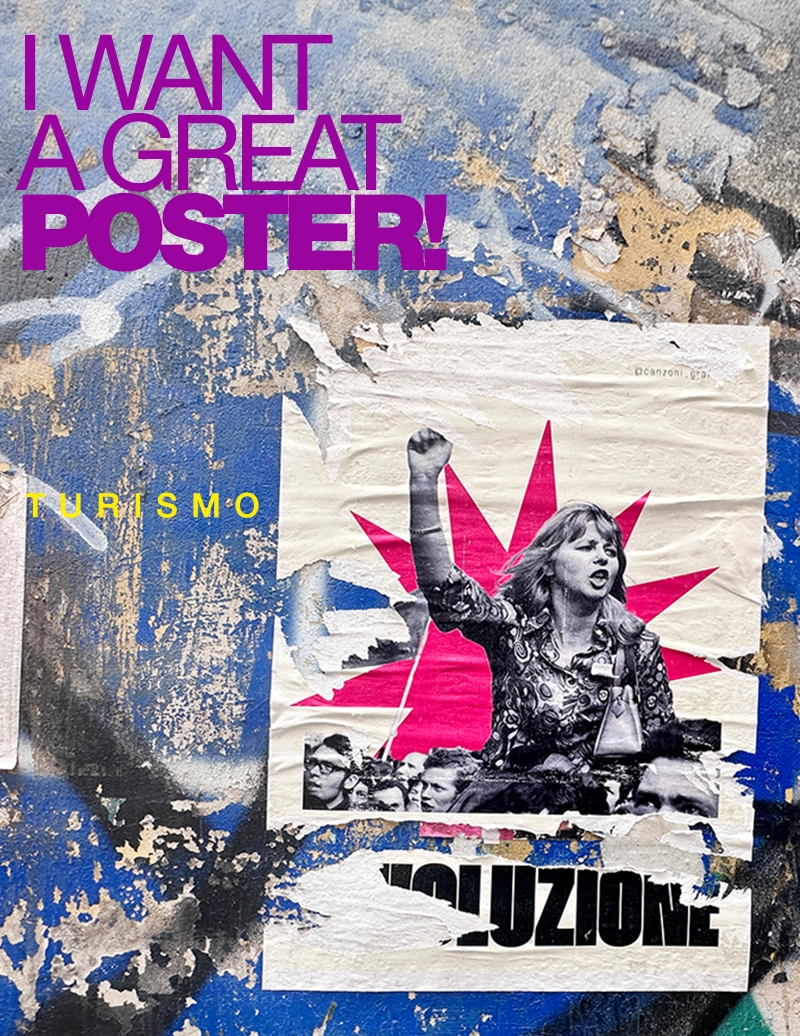
They'd asked me for a poster, and ended up with a € 30,000 dream. How a poster for Holy Week in Molfetta became, in 2006, a plan to promote the processional rites, and what is left of it eighteen years later.


It was an afternoon in December 2006

Dr Franco Stanzione, then prior of the Confraternity of Death, and the photographer Antonio D’Agostino came into my office to ask me to design a poster promoting the Holy Week processions in Molfetta. "Gaetano, we want a nice poster for Holy Week."

In the photographer's studio

A few days later, I had an appointment at D'Agostino's studio in the historic centre of Molfetta. Sitting opposite me were the prior, the treasurer and the secretary of the Brotherhood. They were waiting for the poster layout to be approved. I placed a typed document on the table: a plan to promote tourism around Molfetta’s Easter rituals. Worth thirty thousand euros. I hadn’t even prepared the poster layout they’d asked me for.

There was a silence. The kind that seems to go on forever. Antonio D'Agostino shot me a sidelong glance, the sort of look that says what on earth have you done. The treasurer and the secretary didn’t say a word. The prior turned bright red and said to me, ‘But we don’t have thirty thousand euros.’ I asked him how much the Brotherhood could contribute. He replied: three thousand. "Right. I'll sort out the rest." At that point, their expressions changed once again. The first shock had been the design in place of the poster. The second was realising that I was serious.

I took a gamble by trying to raise the bar and focusing on the emotional aspect of the project; I wanted to offer a ‘dream’, a vision: it was a huge professional and personal challenge for me too, and it turned out to be an unforgettable experience. It was a fraternal environment that I was unfamiliar with, but by experiencing it from the inside, I came to appreciate the great human qualities of those who are part of it.


What this article doesn’t cover

How I knocked on the doors of eight local companies and why all eight said yes. How we took Molfetta to the BIT in Milan and why we had a stand at Bari-Palese Airport for a full two months. The entire toolkit, including the items I have and those I honestly don’t have, lI’ve compiled it all in the project sheet along with a substantial photo gallery. And there’s one more thing I’m keeping to myself. After Easter, at the BIT and in Bari-Palese, a certain question started to come up again. Same question. Different people, different regions. At first, I didn’t answer properly. Then I realised he was scrapping the 2007 project and building a new, much bigger one.

The following year, Molfetta would no longer be enough.  The eight companies that said yes, what really happened in Milan and Bari-Palese, and how a city-wide project became a regional project.


Molfetta, December 2006: how a request for a poster became a tourism promotion plan

ITALIAN ...

25 May 2026

«C' tand vtndaoin propr'a taech avevavn chiamà»

A line in Bitonto dialect, a meeting room and a chef who rose to his feet. Ten years on, Emanuele Natalizio brings to Bitonto one of the most important food events of 2026.


«C' tand vtndaoin propr'a taech avevavn chiamà.»

Of all the people in Bitonto, they had to call me. He had risen to his feet. Meeting room, Bitonto, 2016. Together with the then Councillor Rocco Mangini, I was coordinating one of the participatory meetings to build the city's tourist guide, VISITBITONTO: hospitality operators, restaurateurs, associations. One of those tables where everyone brings their own piece and in the end something shared is supposed to come out of it. Emanuele Natalizio, chef and patron of "Il Patriarca", had decided his piece was that one.


I chose not to answer him.


How real respect is born

In the years that followed we crossed paths several times, always within the perimeter of Apulian agri-food promotion. Each time with less distance between us. Emanuele is one of those people who don't soften their positions to look good: they tell you what they think and let you do the same. Over the years, we came to understand each other. Without ever saying so out loud.


What he built in the meantime

Today Emanuele chairs the Foglia d'Olio Association, and on 1 June he brings to Piazza Cattedrale a dinner-event built around extra virgin olive oil as cultural identity: Euro-Toques Italia, the UNESCO recognition of Italian cuisine, four Bitonto chefs signing the tasting menu, the actor and director Michele Placido as guest of honour. It isn't an event. It's a thesis. Adding weight to the evening will be Enrico Derflingher, President of Euro-Toques Italia, one of the figures behind the path that brought Italian cuisine to become UNESCO Intangible Cultural Heritage. In the afternoon, inside the Cathedral, the exhibition Olio d'Artista tells the relationship between oil, art and contemporary creativity.


Before the dinner, a conference on the cultural value of EVO oil and on the future of Italian cuisine as heritage of identity. Bitonto, a city always tied to Apulian olive growing, frames all of this. Not by chance. That morning in 2016 he had told me, in essence, that Bitonto deserved more. That those who work on the ground must have the courage to demand higher standards. It took him ten years. But he got there. I'll be there on 1 June. As a guest, this time.


And as a witness to a trajectory that, I have to admit, I hadn't foreseen that morning in the meeting room


EVO oil meets the UNESCO Cuisines. 1 June 2026 · Piazza Cattedrale, Bitonto

Programme: afternoon conference plus the Olio d’Artista exhibition in the Cathedral

Read the full programme

Bitonto, 2016: a chef stood up and spoke in dialect. Ten years later, EVO oil and UNESCO cuisine in Piazza Cattedrale